



AI companies have money. Audiences have doubts. Your personal brand sits in the middle. For professionals, founders, consultants, creators, and builders using AI in public.
An AI tool can save your audience time, sharpen their work, or help them build something they could not build before. It can also make them wonder whether your judgment is for sale.
That is the personal branding problem. The question is no longer only, “Should I use AI?” It is, “What happens to my reputation when I recommend AI?”
Creators are already feeling the pressure. Recent reporting from Business Insider described AI companies paying creators aggressively while audiences push back in comment sections. The Verge covered a similar backlash around AI video tool promotions, where viewers questioned both disclosure and fit.
This affects any professional who posts tool recommendations on LinkedIn, writes affiliate-linked tutorials, teaches AI workshops, publishes Substack essays, speaks at events, or tells clients which workflow to adopt.
Your recommendation is a trust transfer. When you say, “This tool is worth your attention,” you lend the tool part of your reputation. If the tool disappoints, deceives, steals from people, exaggerates results, mishandles data, or makes your work look lazy, the audience does not only downgrade the tool. They downgrade you.
The New Rule: A Paid Post Is Also a Reputation Bet
A traditional sponsorship asks, “Will this campaign perform?” An AI sponsorship asks something sharper: “Will my audience believe I still stand for the same things after this?”
AI products carry emotional weight. People are thinking about jobs, copyright, privacy, synthetic media, misinformation, and whether the internet is becoming harder to trust. A Pew Research Center report found broad skepticism around AI, including concern that it is advancing too quickly and making personal information less secure.
A calm tutorial for a note-taking app may be read as useful. A flashy promotion for a tool that replaces artists, mimics voices, scrapes work, or creates synthetic testimonials may be read as betrayal. The same disclosure line can land very differently depending on your audience’s values.
The mistake is treating all AI brand deals as the same category. A founder recommending the AI research assistant they use every day is different from a filmmaker promoting a generative video system that competes with the craft their audience respects.
The stronger your personal brand, the more your recommendations become part of your identity.
So the right question is not “Can I disclose this and be legally fine?” It is “Would this still make sense if my most thoughtful audience member studied the deal closely?”
Why AI Promotions Trigger More Backlash Than Normal Sponsorships
Audiences have always disliked hidden ads. AI adds four extra triggers.
1. People suspect shortcuts
If your personal brand is built on craft, taste, research, technical skill, coaching, writing, design, analysis, or original thought, AI can look like a shortcut unless you show where your judgment remains visible.
2. People fear replacement
A productivity tool may look helpful to one audience and threatening to another. If you recommend it without acknowledging the concern, you can sound detached from the people who follow you.
3. People hate being tricked
Undisclosed sponsorships, synthetic demos, fake before-and-after examples, hidden affiliate links, and AI-generated testimonials all attack the same nerve: deception. The FTC’s endorsement guidance is clear that material relationships need disclosure, but trust goes beyond minimum compliance.
4. Platforms are training audiences to flag AI slop
The anti-slop mood is not abstract. Platforms are adding reporting, labels, and detection systems. WIRED has reported on the wider backlash against low-quality AI content, and YouTube’s GenAI disclosure help explains how realistic AI-generated or meaningfully altered content can be labeled.
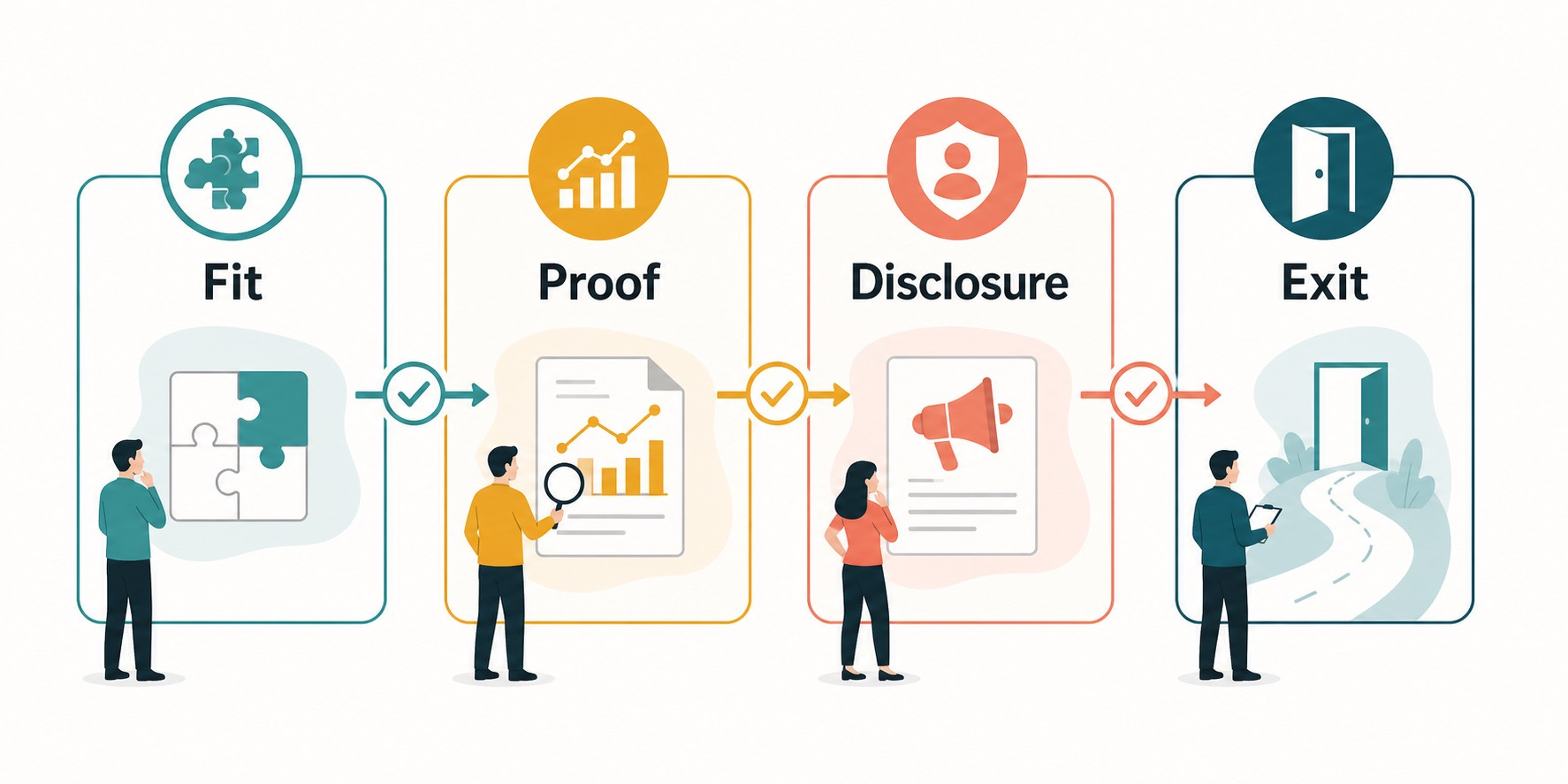
The Fit, Proof, Disclosure, Exit Framework
Before you promote an AI tool, run it through four gates: fit, proof, disclosure, and exit. If one gate fails, slow down. If two fail, say no.

Gate 1: Fit
Ask whether the tool belongs inside your public identity. Not whether it is popular. Not whether the fee is attractive. Whether it fits the reason people listen to you.
A strong fit usually has one of these patterns:
You already use the tool in your work and can show a real workflow.
The tool helps your audience solve a problem you regularly teach.
The tool strengthens your known point of view instead of contradicting it.
The tool’s risks are manageable and explainable.
You would mention the tool even without a payment, affiliate link, or free account.
A weak fit sounds like this: “They offered good money, and I can probably make an angle work.” That is a warning sign. Your audience can often feel when the content was reverse-engineered around a check.
Gate 2: Proof
Never promote an AI tool from a demo alone. Demos are designed to remove friction. Your audience lives in friction.
Use the tool on a real task before you recommend it. Save screenshots, failed outputs, time spent, cost, quality issues, privacy questions, and where human review was required. If the tool only works when you cherry-pick the best output, say that.
The best personal brand recommendations sound less like hype and more like field notes.
Try this AI prompt before accepting a deal:
Audit this AI tool as if my reputation depends on the recommendation. My audience is [describe audience]. My personal brand is known for [values, expertise, promise]. The tool claims [claims]. Identify fit risks, trust risks, privacy risks, skill-replacement concerns, proof I need before recommending it, and the exact questions a skeptical audience member would ask.
Then answer the hard questions yourself. AI can help you see the risk, but it cannot carry the reputational cost for you.
Gate 3: Disclosure
Disclosure should be plain, early, and proportional. Do not hide it in a hashtag pile. Do not use vague phrases like “partnered with” if you were paid.
Good disclosure names the relationship, explains what you actually tested, and separates your judgment from the brand’s claims. That applies to paid sponsorships, free access, affiliate commissions, advisory roles, investor relationships, client relationships, and gifted products.
This is a paid partnership. I tested the tool on my own workflow before agreeing to cover it. The company did not get approval over my opinion, and I will show both where it helped and where I would not use it.
Some links in this guide are affiliate links. I may earn a commission if you buy, but the recommendation is based on my own testing and I will name who should not use the tool.
I received free access to test this tool. I was not paid to publish this, and the company did not review the article before publication.
Disclosure does not kill trust when the recommendation is good. It kills trust when it reveals that the recommendation was thinner than the relationship behind it.
Gate 4: Exit
Every AI deal needs an exit plan because AI products change fast. A tool can change its data policy, add a risky feature, inflate claims, mishandle creator likenesses, or get acquired by a company your audience does not trust.
Before you sign or publish, decide what would make you pull the recommendation. Examples:
The company makes misleading claims you cannot verify.
The tool starts using customer work, likenesses, or private data in ways you would not accept.
The product quality drops below the standard you showed.
The company asks you to hide limits, sponsorship terms, or synthetic media use.
Your audience surfaces credible harm that you missed.
Your exit plan is part of your brand. It tells people you are not trapped by your last invoice.
How Different Professionals Should Apply This
Founders should treat AI recommendations as company signals. If a tool touches customer data, hiring, synthetic media, or legal and financial decisions, explain the limits with care. Do not say, “This is the future.” Say, “Here is the specific work this helped us improve, here are the limits, and here is what we still keep human.”
Consultants and freelancers should make the service boundary clear. A copywriter might use AI for research clustering, not final copy. A designer might use it for mood exploration, not client-ready assets. A strategist might use it to stress-test options, not to make the decision.
Creators and newsletter writers should make their taste visible. Show why you rejected alternatives, name the awkward parts, and explain what a beginner might misunderstand. Job seekers and students can do the same by saying, “I used AI to explore three approaches, then built and tested the final version myself.”
The Trust-First AI Recommendation Template
If you want to recommend an AI tool without sounding bought, structure the post around usefulness, not excitement.
Use this format:
Start with the real problem your audience already has.
Name your relationship to the tool early.
Show the actual task you tested.
Explain where the tool helped.
Explain where it failed or needed human review.
Name who should not use it.
Give one practical next step.
Here is a simple example:
I tested this AI research tool on a messy client-discovery problem because many consultants lose hours turning calls into themes. This is a paid partnership, but the company did not edit my opinion. It helped me cluster objections faster. It did not replace judgment, and I would not upload sensitive client transcripts without a clear data agreement. Best fit: solo consultants doing non-confidential research. Poor fit: regulated teams or anyone needing source-perfect summaries without review.
That is credible because it lets the audience decide with context.
Red Flags That Should Make You Decline
Some AI deals are not worth negotiating. Decline when the company asks for anything that would make your audience feel tricked.
They discourage clear sponsorship disclosure.
They want you to imply results you have not achieved.
They ask you to use synthetic screenshots, fake testimonials, or staged outcomes without saying so.
They want broad rights to your voice, face, likeness, archive, or audience data.
They cannot explain data usage in plain language.
They pressure you to publish before you have tested the product.
They want category exclusivity that blocks honest future recommendations.
Their product replaces the craft your audience respects without acknowledging the tradeoff.
Money makes these red flags easier to rationalize. That is why you need rules before the offer arrives.
Use AI to Evaluate the Deal, Not to Justify It
AI can help you make a better sponsorship decision if you use it as a skeptical reviewer. Feed it the offer, your audience profile, your brand values, your prior posts, and the product claims. Ask it to argue against the deal, find disclosure gaps, and draft a version that includes limits and alternatives.
Try these prompts:
Act as a skeptical long-time reader of my work. Here is an AI tool I may promote: [details]. Here is my public positioning: [positioning]. What would make this feel off-brand, deceptive, lazy, or financially motivated?
Turn this sponsored post draft into a trust-first version. Keep the useful parts, remove hype, add a plain disclosure, add one limitation, add who should not use the tool, and make my real judgment more visible.
Do not ask AI, “Should I take the money?” That decision is yours. Ask AI to show you what you might be missing.
The Personal Brand Standard: Recommend Like You Will Be Remembered
Most weak AI promotions have the same smell: urgency without depth. “This changes everything.” “Everyone needs this.” “The future is here.” “I built this in five minutes.” Those lines may earn clicks, but they do not build long-term authority.
A stronger personal brand has a different rhythm. It says:
I tested this in a real situation.
I know what my audience worries about.
I can name the tradeoffs.
I am not hiding the relationship.
I am willing to revise my recommendation if the product changes.
That approach may feel slower. It is. But trust is a slow asset, and the goal is to become known for recommendations that age well.
AI brand deals will keep growing because AI companies need trust and creators have it. That makes your judgment more valuable, not less. The audience is not asking you to reject every tool. They are asking you to prove that your standards survived the incentive.
A Simple Decision Checklist
Before you publish any AI promotion, answer these questions:
Would I recommend this tool without payment or perks?
Have I tested it on a real task, not only a polished demo?
Can I explain who should not use it?
Can I disclose the relationship in one plain sentence?
Does this tool align with the work my audience trusts me to understand?
Have I checked data, privacy, likeness, copyright, or labor concerns that matter to my audience?
Would I be comfortable if someone screenshotted this post next year?
Do I have the right to criticize the product honestly?
Do I know what would make me withdraw the recommendation?
If you cannot answer those questions clearly, the deal is not ready. The risk is not only backlash. The bigger risk is becoming someone your audience has to interpret cautiously.
FAQ
Should creators accept AI brand deals?
Creators can accept AI brand deals when the tool fits their audience, has been tested honestly, is disclosed clearly, and does not conflict with the values their audience trusts them for. The better question is not whether AI is involved. It is whether the recommendation still reflects your judgment.
How should I disclose an AI sponsorship?
Disclose the relationship early and plainly. Say whether you were paid, received free access, have an affiliate link, advise the company, invested in it, or have another material relationship. Then explain what you tested and whether the sponsor influenced your opinion.
Are affiliate links risky for personal branding?
Affiliate links are not automatically risky. Hidden incentives are risky. If you use affiliate links, disclose them clearly, recommend only tools you would stand behind without the commission, and include limitations so readers know you are not just optimizing for payout.
What makes an AI tool promotion feel untrustworthy?
It feels untrustworthy when the creator shows only perfect outputs, hides the sponsorship, repeats vendor claims, ignores privacy or ethics concerns, uses synthetic demos without explanation, or promotes a tool that clashes with the craft their audience respects.
Can AI help me evaluate a brand deal?
Yes. Use AI to pressure-test the offer, simulate skeptical audience reactions, identify disclosure gaps, compare the tool against your brand values, and rewrite promotional copy with more nuance. Do not use AI to rationalize a deal you already know feels wrong.
What should founders know before promoting AI tools?
Founders should remember that personal posts can be read as company signals. Before promoting an AI tool, check whether it reflects your product philosophy, privacy standards, hiring values, and customer promises. A casual endorsement can shape how people judge your company.