


The goal is not to confess every tool you touched. It is to make the part that matters easy to understand.

A credible professional identity makes its process legible when the process affects how someone should judge the work.
Someone asks how you wrote a sharp LinkedIn post, made a polished headshot, or built an impressive research brief. You used AI somewhere in the process. Do you say so?
That question feels awkward because it is usually framed as a binary: disclose everything or hide everything. Neither is a useful personal-brand strategy. A spelling suggestion and a generated testimonial are not the same kind of assistance. A brainstorm and a synthetic video of you speaking are not the same kind of claim.
For a professional, the better question is: would knowing how this was made change how a reasonable person evaluates it, trusts it, or acts on it? If yes, explain the material role of AI plainly. If no, keep the focus on the work—but still own every claim under your name.
This matters now because people are not merely asking whether a post sounds artificial. They are deciding whether the person behind it has judgment. LinkedIn’s current guidance asks members to review, edit, and approve AI-assisted work, and says heavier use should be made known when context does not already make it obvious. Its larger point is useful beyond one platform: content should carry a real person’s perspective, experience, and responsibility.
Good disclosure does not make your work smaller. It makes the human judgment behind it easier to see.
Why a generic AI disclaimer can weaken trust
“This was made with AI” looks transparent, but it often creates more confusion than it resolves. Did AI fix grammar? Draft the argument? Create the image? Supply the numbers? Imitate someone’s voice? A vague label sends the reader back to the exact question they were trying to answer: what, precisely, should I trust here?
The opposite failure is a polished piece with no trace of the person who supposedly stands behind it. A consultant posts a sweeping lesson with no client-safe example. A founder shares a pristine selfie that does not resemble the person at a meeting. A job seeker posts a career story containing experiences they cannot discuss. The problem is not that a machine helped. The problem is that the public is asked to infer authorship, expertise, or lived experience that has not been earned.
Recent discussion around “AI slop” has made this especially visible. LinkedIn defines the issue by value and point of view, not simply by tool use. That is a helpful standard for your own personal branding: make the disclosure proportional, then make the human contribution unmistakable.
The materiality test: when AI use changes the reader’s judgment
Use this five-question test before you publish. You are not looking for a legal verdict. You are deciding whether AI use is material to the relationship you are trying to build.
Did AI create or substantially alter the core asset? A generated image, synthetic voice, avatar-led video, or draft that supplied the central argument is more material than proofreading your own finished words.
Could the asset be mistaken for a record of your real experience? A fabricated “behind the scenes” image or a first-person story generated from prompts deserves clear context.
Does the content influence a consequential decision? Hiring, investment, health, financial, legal, client, or public-safety contexts call for more visible explanation and rigorous verification.
Did the tool handle private, client, or third-party material? The disclosure may not need to expose the source, but you need a defensible process for permission, privacy, and review.
Could you answer a direct question about how it was made without changing the reader’s view? If the truthful answer would surprise a reasonable person, disclose the relevant part before they have to ask.
A simple rule: disclose the use that changes interpretation, not the tool that merely removed friction. Then name the human who checked, decided, and takes responsibility.
This approach matches emerging public guidance. Australia’s National AI Centre recommends scaling transparency to both the potential impact of the content and the degree to which AI created or changed it. That is a better model than a one-line policy copied under every post.
Choose the right disclosure level
Think in levels. The higher the chance that people will mistake generated output for your expertise, likeness, evidence, or live performance, the clearer and closer to the asset your explanation should be.
Level 1: No public disclosure needed, but human review is still required
Use this for low-stakes assistance that does not change the meaning of the work: typo checks, a readability pass on your own draft, meeting-note formatting, headline alternatives, or a private brainstorm you substantially rework. You still verify facts, remove copied phrasing, and ensure the final words are yours to defend.
Level 2: Brief process context
Use a concise note when AI helped organize, summarize, translate, or structure material but you supplied the point of view and checked the claims. This is useful in a newsletter, technical explainer, research roundup, or long LinkedIn post where process context adds credibility.
Example: “I used AI to organize my interview notes; the analysis, examples, and final claims are mine and were checked against the linked sources.”
Level 3: Prominent, specific disclosure
Use this when AI generated or materially transformed the asset, especially an image, audio, video, avatar, simulation, or substantive first draft. Put the explanation near the asset, not buried on an About page. Say what was generated or changed, what is real, and what you personally verified.
Example: “This illustration is AI-generated from my concept. The client examples and conclusions in this post come from my own verified work.”
Level 4: Do not publish until the claim is rebuilt
Pause when a tool has invented a personal event, fabricated a result, imitated a real person without permission, altered a credential, or produced advice you cannot support. Disclosure does not repair a false claim. The responsible move is to remove it, rebuild from verifiable sources, or say less.

The disclosure decision is a judgment call about context, consequence, and what an audience needs to evaluate the work fairly.
Build a one-page AI use statement for your personal brand
You do not need a corporate policy. You need a small, stable promise you can follow in public. A good personal AI use statement takes fifteen minutes to draft and saves you from inventing an answer every time someone asks.
Write five short commitments:
Purpose: What do you use AI for? Be specific: editing, translation, idea expansion, coding assistance, research organization, visual drafts, or rehearsal.
Boundaries: What will you not ask it to do? Common boundaries include inventing experience, creating fake testimonials, deciding professional advice, or receiving confidential client material without permission.
Review: How do you check work before attaching your name? State how you verify facts, sources, calculations, links, and likeness.
Disclosure trigger: When will you add context? Use your materiality test, with extra care for synthetic media and consequential decisions.
Correction path: Tell people how to flag a mistake and commit to correcting it. This turns transparency into an ongoing practice rather than a one-time label.
A short statement can live on your website, in a newsletter footer, or in a pinned post. It should not be a performance of purity. The point is to make a clear promise you are prepared to honor.
Starter statement: “I use AI for structured brainstorming, editing, and occasional visual concepts. I do not use it to invent experience, create testimonials, or replace professional judgment. I check factual claims and disclose AI-generated or materially altered media when that context helps people evaluate the work. I remain responsible for everything published under my name.”
Make the human contribution visible before adding a label
Disclosure is not a substitute for substance. The strongest antidote to generic AI content is not a clever caption; it is evidence of your thinking.
Before publishing, add one or more of these human signals:
A specific decision you made and the trade-off you rejected.
A first-hand observation that a model could not have experienced for you.
A source, test, or example that lets readers inspect an important claim.
A limitation, exception, or uncertainty you are willing to name.
A concrete next step that reflects your actual practice—not a vague motivational flourish.
Consider a founder writing about a product launch. “AI helped me polish this post” is fine, but it is not the trust signal. The trust signal is the founder explaining which customer feedback changed the roadmap, what the team did not ship, and what remains uncertain. The disclosure tells readers how to interpret the polish. The judgment tells them why the founder is worth following.
Use provenance tools as a receipt, not a personality
For images and other media, provenance signals can add useful context. Content Credentials, based on the C2PA standard, can record information about an asset’s origin and editing history. They are not a lie detector, and their absence does not prove that something is human-made. They are a record that depends on participating tools and a chain of handling.
That distinction matters for a personal brand. A credential can support your explanation, but it cannot supply the accountability that only you can provide. If you share an AI-assisted illustration, say so in plain language. If you use a synthetic spokesperson or voice, make the relationship clear where a viewer encounters it. If you publish a real photograph with an AI-assisted cleanup, decide whether that change affects what the image claims to show.
Technical metadata is useful when it backs up an honest description. It becomes a distraction when it is used to avoid the simple question: what should a person understand about this work before they rely on it?
A 20-minute pre-publish trust check
Run this routine whenever the stakes are more than casual social posting:
Name the claim. Write one sentence about what the audience is being asked to believe about you, your experience, or the asset.
Mark the AI role. Was it an editor, organizer, generator, transformer, simulator, or voice/likeness substitute?
Check the evidence. Open every source. Recalculate any number. Confirm that an example is yours to share and accurately credited.
Pick the disclosure level. Use the materiality test. Put the explanation next to the asset when it affects interpretation.
Perform the stranger test. Imagine a smart person who has not met you asks, “What did you personally do here?” Make sure your post answers honestly.
This is also a practical way to avoid the sameness that makes AI-assisted personal branding feel disposable. Your process is not the content. But your decisions—the things you noticed, declined, tested, and can explain—are.
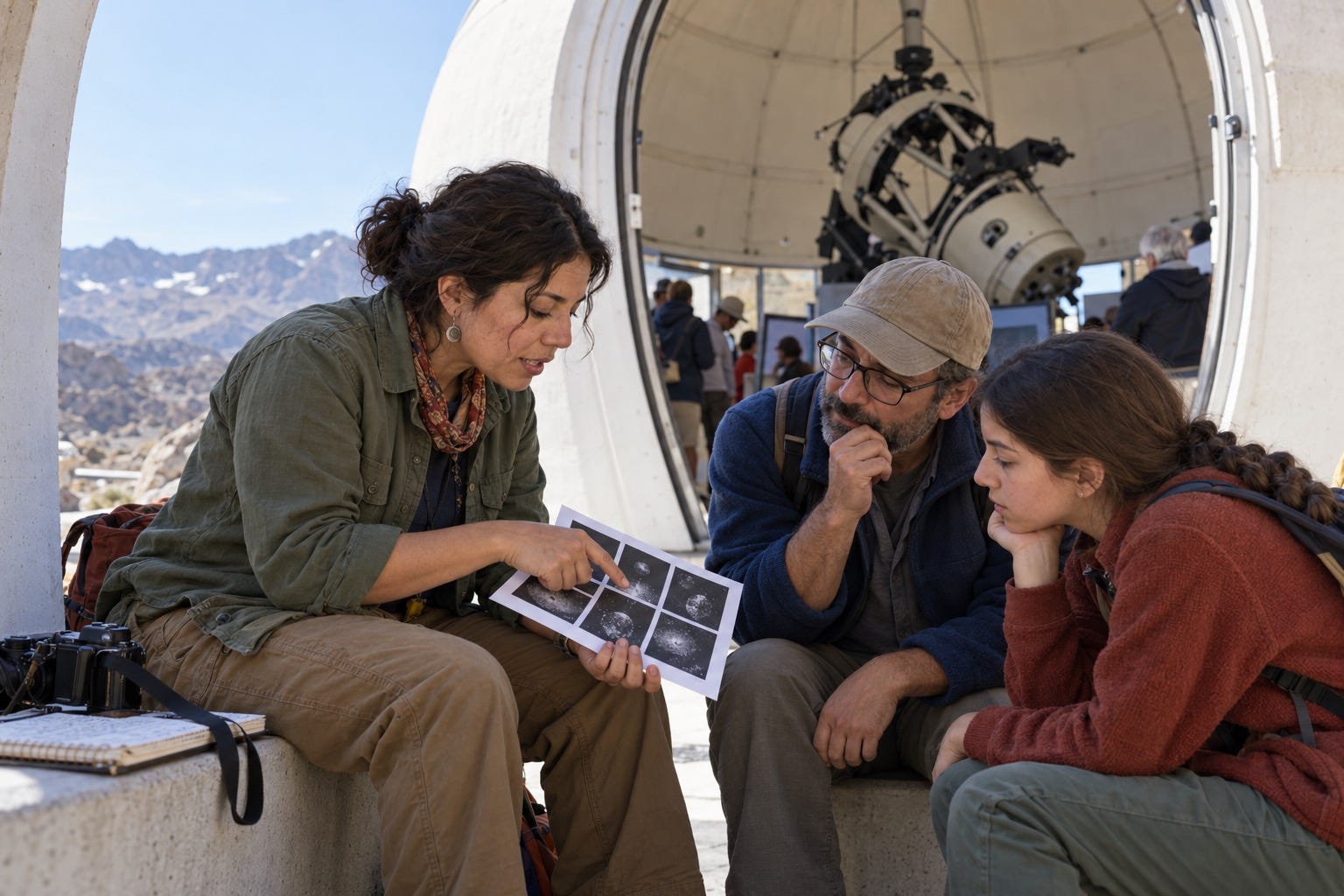
Trust grows when an expert can show their process, answer a question, and remain accountable for the conclusion.
The reputation you are building
AI will keep getting better at making professional work look finished. That raises the value of the things finish cannot fake: a defensible point of view, a clear boundary, accurate credit, and the ability to explain your choices under a follow-up question.
So do not treat disclosure as a badge of shame or a ritual disclaimer. Treat it as design for trust. Be quiet about low-impact assistance. Be clear about material generation or alteration. Be especially direct when an asset could affect someone’s decision about your expertise, identity, or integrity. Then do the more important work: give people a real reason to recognize your judgment.
Frequently asked questions
Do I need to disclose AI help on every LinkedIn post?
No. A minor edit or proofreading pass on your own work usually does not need a public note. Disclose when AI played a material role or when knowing about it would change how a reader interprets the post, image, evidence, or claimed experience.
Should I disclose AI-assisted professional headshots?
Use clear context when an image is generated or materially changes your present-day appearance. The most important test is recognizability: people who meet you should not feel that the image promised a different person.
What is a good AI disclosure for a personal website?
Keep it specific and accountable. Explain the uses you permit, the boundaries you keep, how you review output, and when you disclose material generation or alteration. Include a way for readers to raise corrections.
Does an AI disclosure make my content look less credible?
Not if it clarifies a relevant process and the work shows genuine judgment. A vague, defensive disclaimer can distract. A short, proportionate explanation plus evidence of your expertise usually gives readers more context, not less.
Are Content Credentials proof that an image is real?
No. They are provenance information, not a universal detector of truth or AI use. They can help document an asset’s origin and changes when supported by the tools involved, but readers still need clear language and responsible human accountability.
What should I never ask AI to do for my personal brand?
Do not use it to fabricate client outcomes, credentials, testimonials, personal experiences, or someone else’s likeness or voice without permission. Do not publish consequential advice you have not checked. Those are integrity problems, not disclosure problems.