


The fastest way to weaken your personal brand right now is to publish a bio that sounds polished, empty, and obviously machine-written. The good news is that AI can still help. You just need a better system.

In the past week alone, professionals on Reddit were complaining that LinkedIn feels like an “AI ghost town.” That reaction matters because your professional bio now gets read in the same environment as AI-polished posts, AI-assisted comments, and auto-generated summaries. Readers are getting better at spotting generic language. Trust drops faster than it did a year ago.
That is why this is a useful moment to rethink the AI executive bio generator category. Most people are using these tools like vending machines. They paste in a title, a few achievements, maybe a company name, then accept the first smooth-looking paragraph the model gives them. The result is usually a bio full of leadership clichés, broad adjectives, and safe corporate phrases that could belong to almost anyone.
A strong bio does the opposite. It makes you legible. It tells a recruiter, client, conference host, investor, journalist, collaborator, or future hire exactly why you matter, what you see that others miss, and why they should trust your perspective.
This article will show you how to use an AI executive bio generator the right way. Not to invent a better mask, but to turn your actual experience into a cleaner, sharper, more credible narrative across LinkedIn, your website, speaker pages, podcast guest intros, and other high-trust surfaces.
Why your professional bio matters more in the AI era
Most personal branding advice over-focuses on content volume. Post more. Repurpose more. Publish everywhere. That is not useless, but it misses a basic truth: before people trust your content, they often check your profile. Before they book the call, invite you to speak, or forward your name, they look for your bio.
Your bio now acts like a trust compression layer. It helps people answer five questions quickly:
Who is this person?
What do they actually do?
Why should I believe them?
What are they known for?
What kind of thinking do they bring?
If your bio fails, the rest of your personal brand has to work much harder. If it succeeds, every other touchpoint gets easier. Your LinkedIn profile feels clearer. Your website sounds more coherent. Your speaker intro stops sounding like a stale corporate handout. Your podcast guest pitch becomes more bookable.
A good bio does not just summarize your career. It creates a usable reputation.
This matters even more for founders, executives, consultants, and experts in technical fields. People are not only evaluating your credentials. They are evaluating judgment. In a market full of AI-generated sameness, judgment is part of the brand.
What most AI executive bio generator outputs get wrong
Tool pages promise speed, polish, and convenience. Those benefits are real. But the default output quality is often weak because the input strategy is weak.
Here are the three most common failures.
1. They lead with generic authority language
“Visionary leader.” “Passionate innovator.” “Results-driven executive.” “Dynamic founder.” These phrases are not proof. They are reputation wallpaper. They fill space without increasing belief.
2. They confuse chronology with positioning
A bio is not a compressed resume. Listing jobs in order does not tell the reader what you want to be known for now. The best bios are selective. They organize facts around a point of view.
3. They flatten voice
Many AI drafts smooth away the texture that makes someone memorable. Your slightly sharper phrase. Your contrarian belief. Your clearer operating lens. Your real-world proof. When those disappear, your bio may look “professional,” but it stops sounding like a person worth quoting.
Simple rule: if your bio could be swapped with another executive in your category and still sound plausible, it is not done.
The trust-first input system before you generate anything
If you want better output, stop starting with the tool. Start with the source file.
Create one working document with these five ingredients:
1. Your proof stack
List the concrete things that create credibility: measurable outcomes, recognizable contexts, unusual scope, real domain depth, strong clients, difficult problems solved, notable stages, or earned media. Keep this factual.
2. Your current positioning sentence
Write one sentence that answers: what do you want to be known for now? Not your full career. Now. For example: “I help B2B founders turn technical expertise into clear public authority.” Or: “I build finance systems that let companies grow without losing decision quality.”
3. Your perspective lines
Write three to five short statements you actually believe about your field. These create voice. They also stop the AI from defaulting to bland prestige language.
4. Your audience map
Decide who will read this version: recruiters, clients, media, event hosts, founders, peers, or partners. A strong bio changes emphasis depending on the reader.
5. Your anti-claims list
Write down what you do not want the model to say. This is underrated. Maybe you do not want hype words, fake mission language, inflated leadership labels, overuse of “passionate,” or claims that make you sound broader than you really are.

A practical AI prompt workflow that produces better bios
Once you have the source file, then use the AI executive bio generator. But do not ask for “a professional bio.” Ask for a constrained outcome.
Here is a prompt structure that works better than most one-line requests:
Write a third-person executive bio for a founder in B2B AI.

Goal: sound credible, specific, and human. Do not sound like a press release.

Audience: conference organizers, podcast hosts, and high-intent prospects.

What this person should be known for now:
[insert positioning sentence]

Proof points:
[insert 5 to 8 concrete facts]

Beliefs and perspective:
[insert 3 to 5 short statements]

Constraints:
- no “visionary,” “passionate,” or “thought leader”
- no inflated claims
- no generic leadership clichés
- use plain English
- include one sentence that signals point of view
- keep it between 140 and 180 words

Then produce:
1. one primary version
2. one slightly sharper version
3. one simpler version
This works because you are giving the model a role, a reader, a positioning goal, proof, voice constraints, and versioning instructions. That is how you turn AI from a bio machine into an editorial assistant.
After the draft comes back, do not ask, “Can you make it better?” Ask for targeted changes:
Make the first sentence less generic.
Replace abstract adjectives with proof.
Cut anything that sounds outsourced.
Make the second paragraph more specific to fintech founders.
Rewrite this for a podcast host researching guests.
That editing layer is where most trust gets recovered.
How to turn one master bio into four high-value versions
The smartest personal branding move is not writing one perfect bio. It is building one trustworthy source narrative, then adapting it to context.
LinkedIn About section
This version can be more direct and first-person if that matches your style. It should combine credibility, what you work on, and what you care about. It should feel less like formal PR and more like a clear professional introduction.
Website bio
This one should usually be broader. People on your site may not know your category yet. Give them a stronger opening, clear proof, and a sentence or two about your approach. If you publish, speak, or advise, this is where that context can sit cleanly.
Speaker bio
Conference organizers need quick relevance. Lead with why you are worth putting on stage, not your full work history. Topics, notable outcomes, and domain authority matter more than complete chronology.
Podcast or media intro
This version should be tight, quotable, and easy for a host to read aloud. Long clauses and dense credentials hurt delivery. Aim for clarity, rhythm, and one memorable angle.
When you adapt the master version, keep the facts consistent but change the emphasis. That consistency is what makes a personal brand feel coherent across surfaces.
What to remove before you publish any AI-generated bio
Before you paste a final draft anywhere, run this credibility filter:
Delete empty adjectives that are not supported by proof.
Cut one sentence that sounds like brand theater.
Check every title and claim for exact accuracy.
Remove jargon that a smart outsider would not use.
Make sure the first two sentences answer why you matter now.
Add one line that reveals thinking, not just history.
If the bio still sounds too polished, that is often a signal that it needs one more specific detail. A strange problem you solved. A stage of company you know deeply. A market you understand unusually well. A belief you return to. Specificity is what makes authority feel earned.
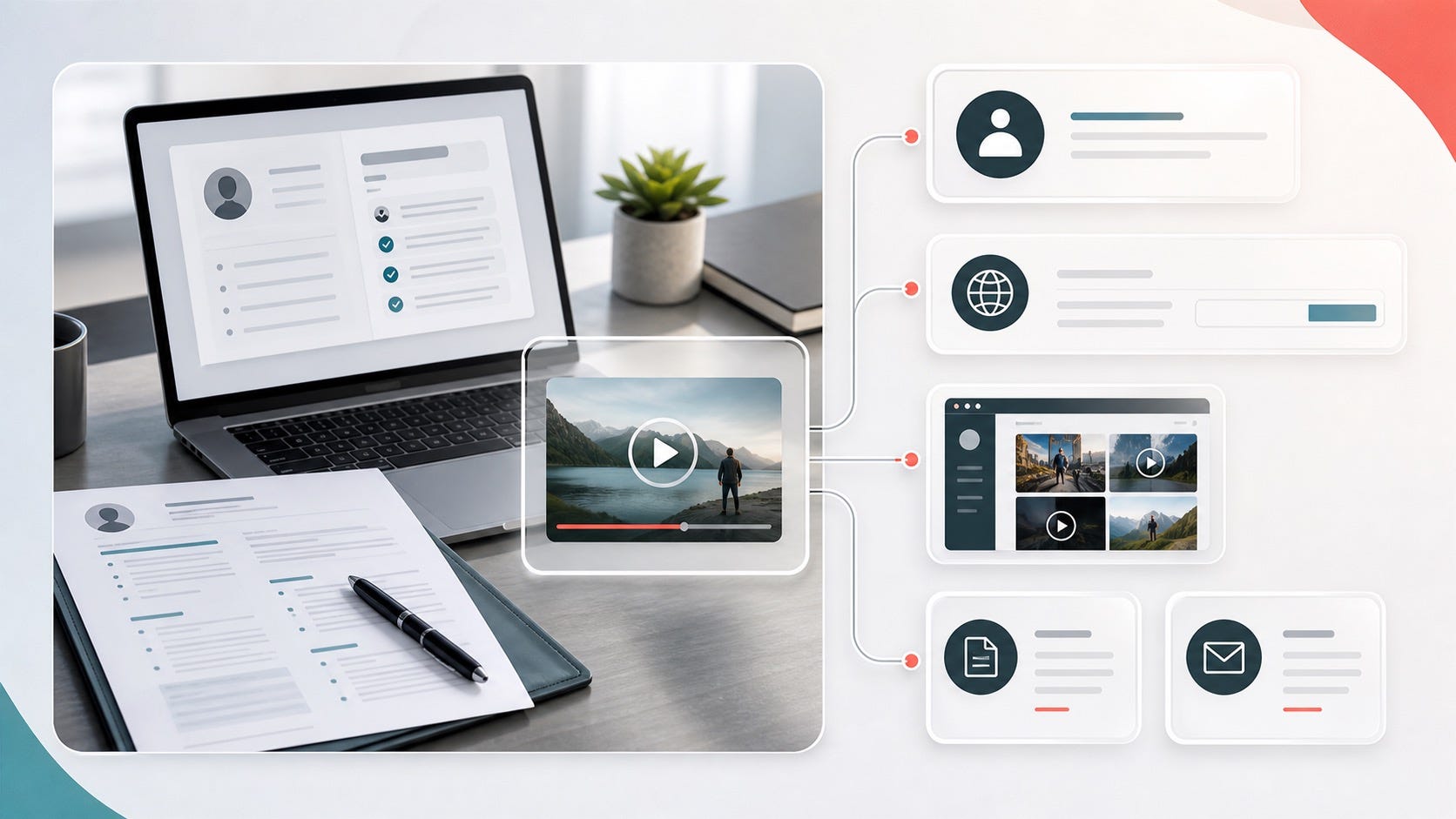
A 30-minute refresh system for your personal brand bio
You do not need to rewrite your bio every week. But you should refresh it when your relevance changes.
Use this monthly system:
Spend 10 minutes updating your proof stack with new outcomes, projects, speaking appearances, media, or notable work.
Spend 10 minutes reviewing your current positioning sentence. Is it still the clearest description of what you want to be known for?
Spend 10 minutes updating the four derivative versions: LinkedIn, website, speaker, and media intro.
This is small work with compounding returns. Every intro, DM, referral, application, guest pitch, and speaking opportunity becomes easier when your bio is already usable.
That is the bigger point. An AI executive bio generator is not valuable because it helps you write faster. It is valuable because it helps you create a sharper, more portable professional identity. If you supply the right raw material and edit with discipline, AI can help you sound more like yourself, not less.
FAQ: AI executive bio generator and personal branding
What is an AI executive bio generator?
An AI executive bio generator is a writing tool that turns inputs like role, achievements, experience, and goals into a professional bio draft. The best use case is not one-click publishing. It is structured drafting followed by human editing.
Can I use an AI bio generator for LinkedIn?
Yes, especially for your LinkedIn About section. But you should guide the model with real proof, positioning, and tone constraints. Otherwise the output often sounds generic and lowers trust.
Should an executive bio be first person or third person?
Use first person for platforms where a direct voice feels natural, such as LinkedIn or a personal website. Use third person for speaker bios, company pages, press material, and many event contexts. Keep the underlying facts consistent either way.
What should I include in a founder bio?
A strong founder bio should include current role, category relevance, key proof points, what the founder is known for, and one signal of perspective or operating philosophy. It should not read like a compressed resume or a string of titles.
How long should a professional bio be?
You usually need multiple lengths. A short version might be 50 to 80 words. A medium version might be 120 to 180 words. A longer website or speaker version might run 250 to 400 words depending on context.
Why do AI-generated bios sound fake?
They usually sound fake because the prompt is vague and the model fills the gap with prestige language, broad adjectives, and common bio patterns. Better inputs and sharper editing fix most of this.
Can one bio work across LinkedIn, websites, and speaking pages?
One master narrative can, but one exact paragraph usually should not. Build one source-of-truth bio, then adapt the emphasis, length, and point of view for each surface.