


Use AI to make it easier for other people to describe your work - without letting it inflate, flatten, or outdate your reputation.

A useful media kit helps another person introduce your expertise with care.
Every introduction is a small act of trust. A host, client, event producer, journalist, or collaborator is about to put your name in front of other people. They may have thirty seconds, a few scattered links, and an AI tool that can turn a guess into confident-sounding copy.
That is why a personal brand media kit matters now. It is not a vanity PDF full of logos and superlatives. It is a practical source packet that makes the accurate version of you easier to find, reuse, and correct.
AI can help you organize a kit, adapt a bio for a specific audience, identify stale claims, and turn your approved facts into a host-ready introduction. It cannot decide which achievement is still relevant, whether a result needs context, or whether a flattering phrase is actually true. Those are reputation decisions. They stay with you.
The goal is not to control every word someone says about you. The goal is to make the truthful version the easiest version to use.
What an AI media kit for a personal brand actually does
A media kit is a small, maintained collection of material another person can use to understand, assess, and introduce your work. For a consultant, it might support a podcast invitation or a partner referral. For a founder, it might help a conference organizer decide whether your perspective fits a panel. For a technical expert, it can keep a reporter from turning one old job title into your whole identity.
The key word is use. A kit that looks impressive but forces a recipient to search through five pages, rewrite your bio, or guess what you can speak about has not reduced friction. A useful kit answers their practical questions:
Who is this person, in plain language?
What problem, audience, or point of view are they genuinely known for?
What proof can I safely mention?
What topics can they address without being stretched beyond their expertise?
Which photo, pronunciation, link, and contact route are current?
Think of the kit as an introduction system, not a self-promotion system. It should help a real person make a good judgment quickly. That is a more durable form of personal branding than trying to make every asset sound important.
Start with a source record, not a prompt
The easiest mistake is opening an AI tool and asking it to “write my media kit.” That prompt gives the tool an invitation to fill gaps. It may combine an old bio with a recent post, confuse a client outcome with your own result, or turn a modest role into a grand claim. The copy can feel polished precisely because it hides the uncertainty.
Build a private source record first. This can be a simple document, not a complicated database. Create five sections:
Current facts. Your role, location only if you choose to publish it, professional focus, approved name, pronunciation, and current contact route.
Verified proof. Selected work, credentials, publications, talks, awards, or results you can substantiate. Add a link, document, or person who can verify each item.
Context and limits. What the proof does not show, what is confidential, what belongs to a team, and what you do not want inferred.
Topics you can own. Questions you have worked on, decisions you can explain, and stories you have permission to tell.
Assets with owners. Photos, short bios, long bios, clips, logos if relevant, and contact details, each with a current version and usage permission.
This record is not for public consumption. It is the material you allow AI to work from. Its job is to make the tool narrower and your judgment stronger.
A useful instruction: “Use only the verified source record below. If a claim lacks evidence, flag it rather than strengthening it. Label statements that are interpretation, not fact. Do not add awards, client names, metrics, or expertise areas that are not included.”
Build the kit in layers so people can take only what they need
One giant page makes a recipient work too hard. Instead, create a compact public page or folder with distinct, reusable layers. AI can produce first drafts for each layer, but every version should trace back to the source record.
1. The one-sentence orientation
This is not a slogan. It is a clear sentence that identifies your audience, professional territory, and useful distinction. “Maya is a product researcher” is true but thin. “Maya helps public-service teams test whether a digital process works for people with limited time, language access, or device access” gives an organizer something they can actually place.
Ask AI for three plain-language variations, then remove any phrase you would not say in a room full of peers. The best orientation sounds specific without trying to sound grand.
2. Three approved bios
Create a short bio of roughly 35 words, a medium bio of roughly 90 words, and a longer version for people who need context. Do not write three unrelated life stories. Start from the same verified spine, then decide what the recipient needs to know at each length.
AI is especially useful here for compression. Give it your source record and ask what it cut, what it combined, and which facts did not fit. That explanation lets you spot whether it has accidentally dropped the part of your work that makes your perspective credible.
3. A topic menu with boundaries
List three to five topics you can discuss well. Each should include a simple promise, a few questions you are prepared to answer, and a boundary. A consultant who has helped teams improve onboarding can speak about decision patterns and lessons learned. They should not imply they can diagnose every organization from a stage.
AI can turn a rough list into host-friendly language. Then use the substitution test: could the same topic menu belong to any competent person in your field? If yes, add a real constraint, example, or recurring question that only your experience supports.
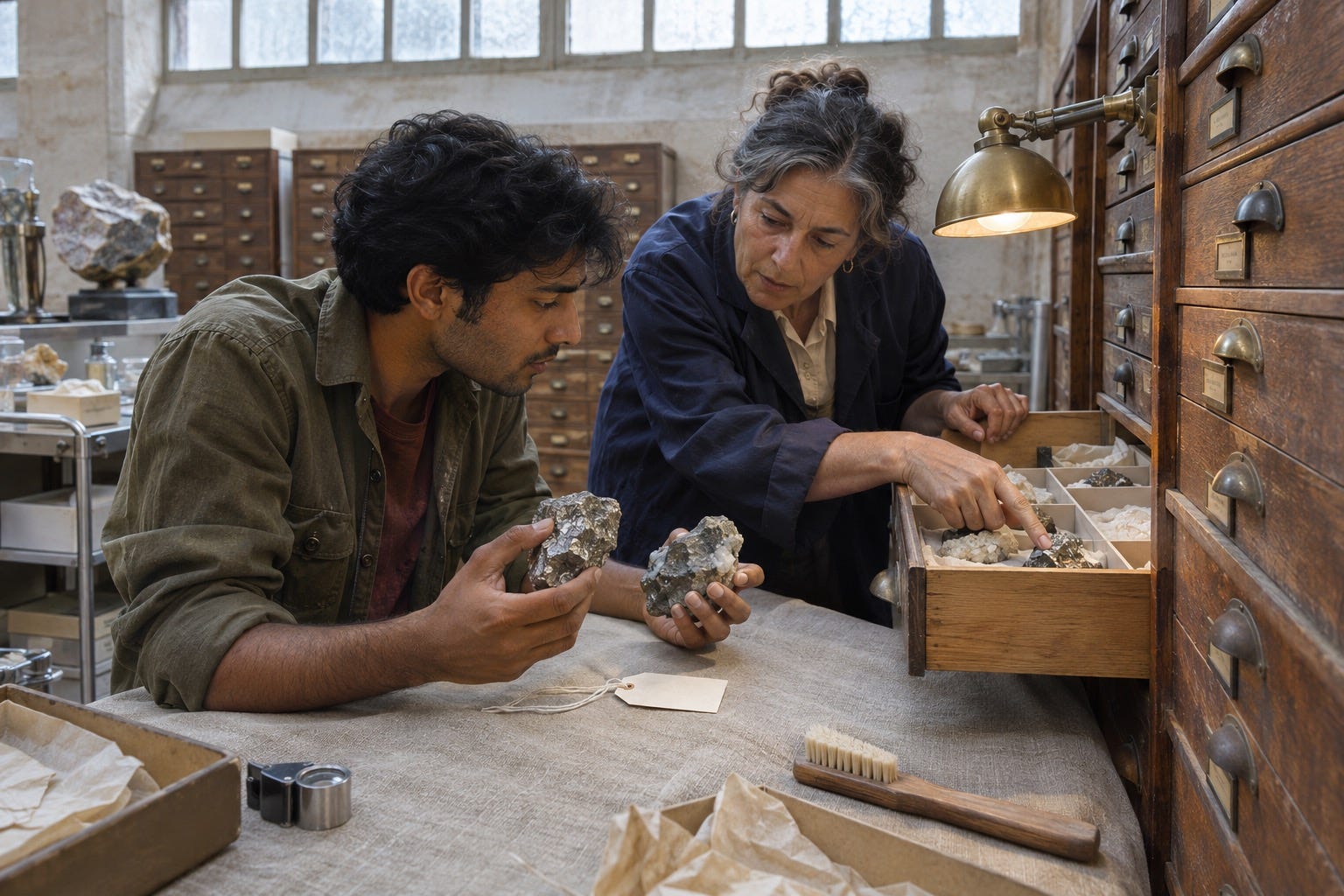
Use AI to organize approved material, then verify what another person could repeat as fact.
4. Proof with its context attached
Proof is not a pile of logos. Select a few examples that help a stranger understand your judgment. For each item, keep a private note: what happened, your role, who can confirm it, what can be named publicly, and what needs qualification.
If you mention a result, say whose result it is. If a client shortened customer wait times, explain your contribution rather than absorbing the entire outcome. If the work was confidential, describe the decision pattern without naming the organization. Credibility often increases when you keep a claim proportionate.
5. Ready-to-use practical assets
Include current, recognizable photographs, a pronunciation guide if useful, direct links, availability preferences, and a reliable booking or inquiry route. Make filenames meaningful for the recipient, not only for you. “Speaker-photo-2026” is more helpful than “final-final-new.jpg,” but avoid showing a public update date you cannot maintain.
Do not include a photo simply because AI made it look polished. A host should be able to recognize you when you arrive. The same rule applies to every asset: it must help someone represent the real person, not a more convenient fiction.
Use AI for transformation, not invention
The strongest AI workflow is deliberately boring: you provide the approved source material, ask for a transformation, inspect the changes, and make the final decision. The risk rises when AI is asked to create evidence, infer authority, or write in the voice of someone who has not reviewed the words.
Here are safe, useful jobs for AI:
Turn an approved medium bio into a shorter event introduction.
Sort a list of appearances by audience and recency.
Flag duplicate claims, conflicting job titles, or stale links.
Create a checklist of missing permissions and source links.
Adapt an approved topic description for a technical, student, or executive audience while preserving the same facts.
Draft questions a host can ask you, clearly labeled as suggestions rather than a script.
Keep these jobs human:
Choosing the claims that define your reputation.
Deciding whether a metric has adequate context.
Confirming client approval and confidentiality.
Making a promise about what a talk, partnership, or appearance will deliver.
Approving language someone else may use to introduce you.
A clean way to work is to ask AI to return three columns in your private draft: approved facts used, assumptions it made, and questions that require your answer. The assumptions column is often where a reputation problem starts.
Run an introduction test before you publish
Send the kit to one trusted person who knows your work and one person who does not. Ask the first person, “What feels overstated, missing, or unsafe?” Ask the second, “What would you say I do after reading this?”
If the answers do not match your intended reputation, do not fix it with stronger adjectives. Find the source of the confusion. Maybe your proof is too broad. Maybe your topic menu does not show the decision you are known for. Maybe your bio has become a chronological list instead of a useful explanation.
Then test it with a real recipient when possible. Give a podcast host or event organizer permission to mark up the introduction. Their edits reveal the information a working introducer needs. Save the useful patterns. If three organizers ask where you have spoken before, that is a cue to make selected appearances easier to find. If they keep mispronouncing your name, the kit needs a clearer guide.
Keep the kit alive without turning it into a content chore
A media kit becomes dangerous when it is mostly true. A former role, an old headshot, or a result detached from context can travel for years. Review the kit after a meaningful change: a new role, a changed focus, an expired credential, a completed project, or a shift in the work you want to invite.
Set a quiet recurring reminder every few months. During the review, ask AI to compare the public kit with your current source record and flag differences. Do not let it silently rewrite the page. Treat the output as a change list for you to accept, reject, or investigate.
This is a small habit with a large reputational upside. You are not trying to seem constantly updated. You are making sure that the next person who wants to open a door for you has accurate material in hand.

A good kit becomes useful when it helps real people introduce you with accuracy and ease.
A simple seven-day build
You do not need a designer, a huge audience, or a long list of press logos to begin. Spend one short session a day for a week:
Day 1: Create your private source record and remove anything you cannot support.
Day 2: Write the one-sentence orientation and three bio lengths.
Day 3: Choose three to five topics, each with a real boundary.
Day 4: Select proof examples and attach context, permission, and source notes.
Day 5: Gather only current, recognizable assets and clear contact details.
Day 6: Use AI to check consistency, create audience-specific drafts, and flag assumptions.
Day 7: Run the introduction test with a trusted peer, then publish the version you can defend.
The finished kit does not need to sound like a press release. It should sound like a responsible person made it easier for another responsible person to explain why their work matters.
Frequently asked questions
What should an AI media kit for a personal brand include?
Include a clear positioning sentence, approved short and long bios, topics, selected proof with context, current photos, useful links, contact details, and private source notes that support every public claim. Use AI to organize and adapt approved material, not to invent achievements.
Is a personal brand media kit the same as a speaker one-sheet?
No. A speaker one-sheet is focused on booking a talk. A personal brand media kit is broader and can help with press, podcasts, partnerships, event introductions, and expert commentary. A speaker one-sheet can be one layer inside the larger kit.
Can AI write my speaker bio or press bio?
Yes, if you provide a verified source record and review every claim. Ask AI to compress, clarify, and tailor approved facts. Do not ask it to infer authority, create metrics, name clients, or write praise as fact.
How do I make a media kit credible if I do not have major press or awards?
Focus on useful evidence rather than status signals. Show the problems you have worked on, the questions you can answer, the decisions you understand, and a few proportional examples of your contribution. Clear boundaries make early-career expertise more trustworthy, not less.
Should my media kit be a PDF or a webpage?
A webpage or well-organized public folder is easier to update and share. A concise PDF is useful when a recipient needs to circulate it internally. Keep the same source record behind both, so one does not become outdated while the other changes.
How often should I update my personal brand media kit?
Review it after material professional changes and on a regular light-touch cadence. Check job titles, proof, photos, links, topic boundaries, permissions, and contact routes. A review is enough. Constant rewriting is not required.