


A speaker bio is not a compressed résumé. It is a tiny promise to a specific room. Here is how to use AI to make that promise clearer without making it less true.
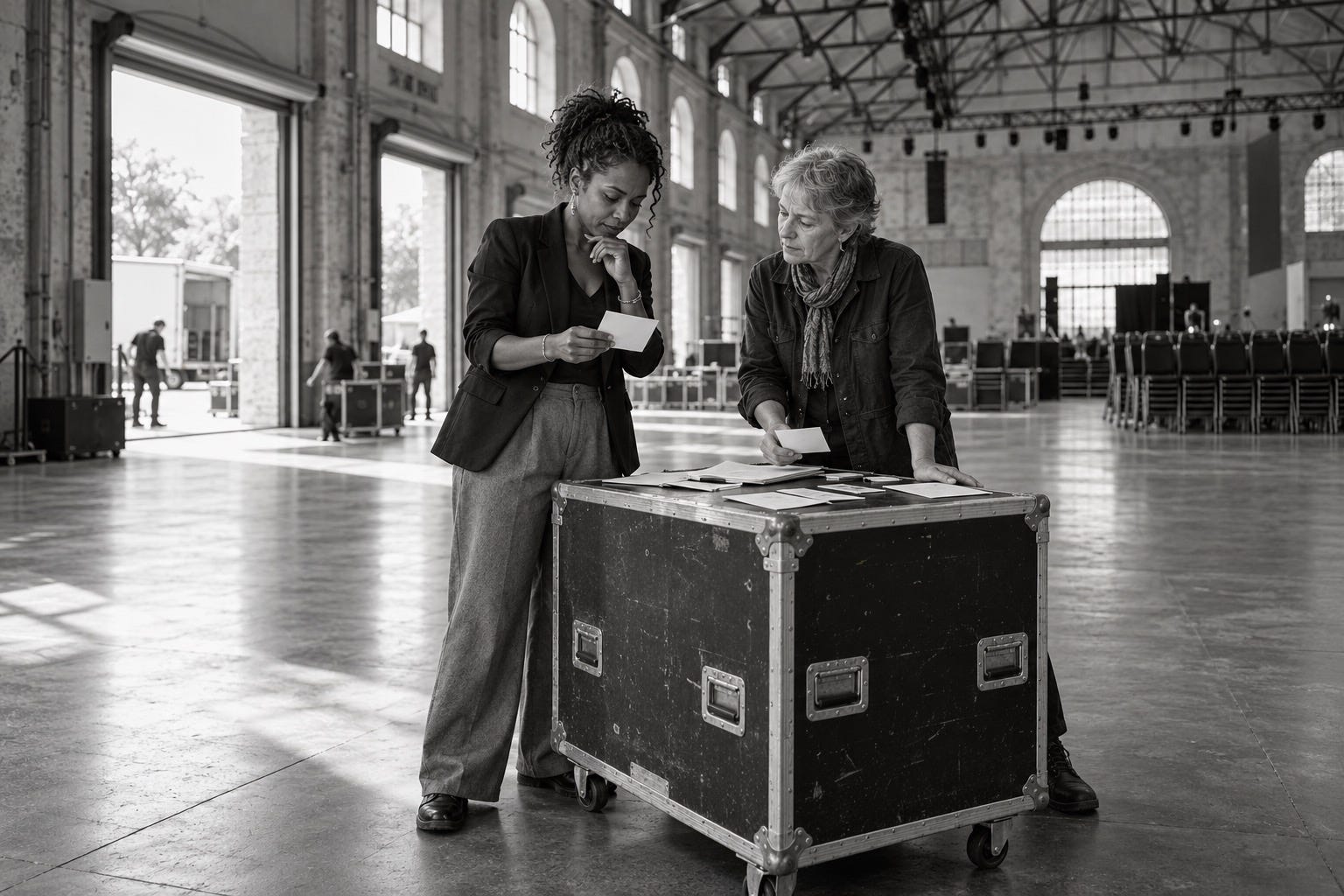
A useful speaker bio begins with a human decision about what evidence belongs in this room.
When an organizer asks for a 100-word bio, most people send a shortened LinkedIn summary. It feels efficient. It is also a missed opportunity. The program blurb, host introduction, and event page may be the first time an audience decides whether your point of view is worth their attention.
That decision is not really about how many credentials you can fit into a paragraph. It is about relevance. Why are you the right person to help this audience think about this question today?
AI can make this work faster. It can compare versions, respect a word limit, turn a verified fact into plain language, and flag phrases that sound like every other expert. But it cannot know which achievement changed your judgment, which example belongs to this audience, or whether a confident-sounding claim is still true. Those are personal-brand decisions. Keep them human.
Your bio is a small piece of public trust
Think about the last event bio you actually read. You probably skipped the person who was called a “passionate thought leader” and stopped at the person whose work made the session feel concrete. Specificity has a calming effect. It tells an audience that the speaker understands the subject well enough to name the work, the stakes, and the useful outcome without hiding behind adjectives.
A strong personal brand does not need to be loud. It needs to be legible. In a speaker bio, legibility comes from three things:
A clear present-day role: what you do now, in language a non-specialist can repeat.
One relevant proof point: a real project, lived experience, body of work, credential, or field observation that earns the right to speak.
An audience bridge: the practical question your session will help people handle.
Notice what is missing: a list of every job, award, client, platform, and ambition. A bio that tries to prove everything usually proves nothing memorable.
Your most credible bio is not the one that makes you sound biggest. It is the one that makes your contribution easiest to understand.
Do not ask AI to “write my speaker bio”
That prompt gives a model too much room to guess. It may produce polished sentences, but polished is not the same as positioned. Generic prompts often lead to generic nouns: innovation, impact, transformation, passion, leadership. Worse, they can encourage the model to smooth a real career into a false story or to imply outcomes you never claimed.
Start with a source packet instead. This is a short, private record of facts you would be comfortable defending if an attendee, journalist, or former colleague asked where they came from. Keep it in a document you own. Update it after projects, career changes, speaking engagements, and meaningful learning—not every time you need a bio.
Build a five-part source packet
Current identity: your role, field, and the problem you work on. Use an accurate job title, then translate it into ordinary language.
Proof inventory: five to ten facts with a source beside each one. These may be published work, a named project you can disclose, a credential, a public talk, a research finding, or a lived professional perspective.
Boundaries: details that are confidential, old, unverified, too personal, or not appropriate for public use.
Point of view: two or three beliefs you can explain through your actual work. “I help teams use AI responsibly” is broad. “I teach product teams to test where an AI recommendation is useful before they put it into a customer journey” is a point of view.
Voice notes: three short samples of how you naturally explain your work. A past post, a transcript, or an email you are proud of is enough.
This packet does not turn you into a brand asset. It prevents a rushed event deadline from rewriting you. It also makes AI much more useful because the model has constraints, not a blank page.
Write an event brief before you draft
The same person can need several truthful bios. A founder speaking to first-time managers should not use the exact paragraph they send to a technical conference. A consultant joining a podcast needs a different introduction from the one printed in a workshop program. The facts can remain stable while the relevance changes.
Before opening an AI tool, write five lines:
Who is in the audience, and what do they already know?
What is the session title or central question?
What does the organizer need: program bio, host intro, email copy, profile page, or one-sheet?
What is the exact word or character limit?
What should an attendee be able to expect without being overpromised?
This is the missing step in most AI speaker-bio advice. You are not merely changing tone. You are selecting the proof that makes the session make sense. Event platforms increasingly recommend unique, event-specific speaker content rather than a copied universal bio, and good organizer guidance also separates a readable program bio from a spoken introduction.

Let AI shape approved material; do not let it decide what counts as proof.
The AI workflow: constrain, compare, then approve
Once you have a source packet and an event brief, AI becomes a helpful editorial assistant rather than an identity generator. Give it approved inputs and a narrow job. Ask for alternatives, not a final answer. Then read each version like a skeptical attendee would.
A practical prompt
“Using only the verified facts below, draft a third-person speaker bio for [audience] attending [event/session]. The bio must be [word count] words. Open with the speaker’s current work and the session-relevant problem. Include no more than one proof point. Do not invent awards, clients, outcomes, affiliations, or superlatives. Avoid these words: thought leader, passionate, innovative, transformative. End by connecting the speaker’s experience to what attendees will explore. After the draft, list every factual claim you used so I can verify it.”
Paste only the facts you have approved for this event. If a client name is confidential, replace it with a truthful category such as “a regional health system” only if you have permission to say that. If the source packet contains old titles, mark them as historical. If you do not have evidence for a result, do not invite the model to imply it.
Ask for a version set, not one perfect paragraph
Request five constrained versions from the same approved material:
A 35-word program card.
An 80- to 120-word event-page bio.
A 45-second host introduction written to be read aloud.
A two-sentence email or social blurb for the organizer.
A fuller one-sheet paragraph that includes one useful proof point and a link list you will add yourself.
Each version has a different job. A program card helps a person choose a session. An event page helps them decide whether to attend. A host introduction creates anticipation in a room. The host copy should not read like a résumé because no one wants to hear a résumé at the beginning of a conversation.
Use the spoken-read test
Read the host introduction aloud, slowly. Better yet, ask a colleague to read it while you listen. If you would not want someone to say the sentence while you are standing nearby, cut it. The same test catches bloated titles, empty praise, long chains of companies, and language that does not sound like a human being.
Look for the sentence that answers the room’s unspoken question: “Why should I listen to this person?” It might be a piece of field experience, a research focus, a professional transition, or an unusually clear framing of the problem. Keep that sentence. Everything else has to earn its place around it.
For example, imagine a product manager who is speaking about making AI features safer for customer support teams. A generic bio might say she is “a dynamic leader advancing responsible innovation.” An event-specific version could say that she leads product work on support tools and studies where automation helps agents without hiding the human handoff. The second version is smaller, but it gives the audience a reason to care.
Make AI-assisted writing more ethical, not more slippery
You do not need a dramatic disclosure every time AI helps you trim a paragraph. But you do need to take responsibility for what appears under your name. The ethical line is simple: use AI to transform, organize, shorten, compare, or clarify facts you have checked. Do not use it to manufacture a professional history, place borrowed praise in your mouth, create a fictional audience result, or hide a major conflict of interest.
Be especially careful with testimonials and client references. A model can make an ordinary comment sound like an endorsement, or move a result from one context to another. Keep quotes exact, get permission, and link to original public material where appropriate. If an organizer wants a claim you cannot verify, offer a better fact rather than accepting the pressure to sound bigger.
Six red flags before you send the bio
A result has no source, date, or permission behind it.
The bio could describe ten people in your field.
Your current title, employer, or pronouns are stale.
A superlative sounds impressive but cannot be defended.
The bio promises that attendees will achieve an outcome you cannot control.
The host intro and event-page bio are identical even though they will be used differently.
A 25-minute speaker-bio sprint
If you have an event deadline today, do not start by prompting. Spend the first five minutes gathering your source packet. Spend the next five writing the event brief. Use ten minutes to generate and compare the version set. Use the final five to fact-check every line, read the host copy aloud, and send the organizer the exact version they need.
Then save the approved facts and the final versions. The next event should not require you to rediscover your own work. Over time, this becomes a small personal-brand operating system: one truthful source, many context-aware expressions, and a visible record of how your expertise connects to real people and questions.

The goal is not a more impressive paragraph. It is a more useful exchange with the people you came to serve.
FAQ: AI speaker bios and personal branding
Can I use AI to write my speaker bio?
Yes, if you use it as a constrained editor. Supply only verified facts, name the audience and word limit, prohibit invented claims, and review the result yourself before anything is published.
What should an AI speaker bio include?
Include your current work, one relevant proof point or lived perspective, and the specific question your session will help the audience explore. Leave out achievements that do not help this particular audience understand the session.
How long should a speaker bio be?
Follow the organizer’s limit. Keep a few approved versions ready: a short program-card bio, a fuller page bio, and a separate spoken introduction. Length is a publishing constraint, not a measure of authority.
What is the difference between a speaker bio and a speaker introduction?
A bio is read privately on a page or in a program; it establishes relevance and credibility. An introduction is heard aloud by a room; it should be shorter, more rhythmic, and should build anticipation for the conversation about to begin.
Should I disclose that AI helped write my professional bio?
Policies and contexts vary. The essential responsibility is accuracy and approval. If a host, employer, publication, or event has an AI-use policy, follow it. Never imply that a model’s wording reflects an endorsement or an independently verified achievement.
How do I keep an AI-generated bio from sounding generic?
Give the model a specific event brief and a verified source packet. Ask it to avoid broad superlatives, use one concrete proof point, and explain the session-relevant problem in plain language. Read the result aloud and remove any sentence you would not say yourself.
Can one speaker bio work for LinkedIn, a podcast, and a conference?
One source packet can support all three, but the published versions should differ. A LinkedIn summary can be broader; a podcast introduction should be conversational; and a conference bio should make a direct bridge between your experience and the audience’s reason for being there.
Let the room, not the model, set the standard
The best use of AI in personal branding is often quiet. It removes the friction of adaptation, not the responsibility of self-definition. Keep a truthful source packet. Choose the proof that fits the room. Let AI offer drafts. Then make the final call with the same care you would bring to the conversation after the talk.
Further reading: Eventbrite’s speaker-bio guide, ASP Events’ guidance on unique speaker profiles, and a useful distinction between bios and spoken introductions.