


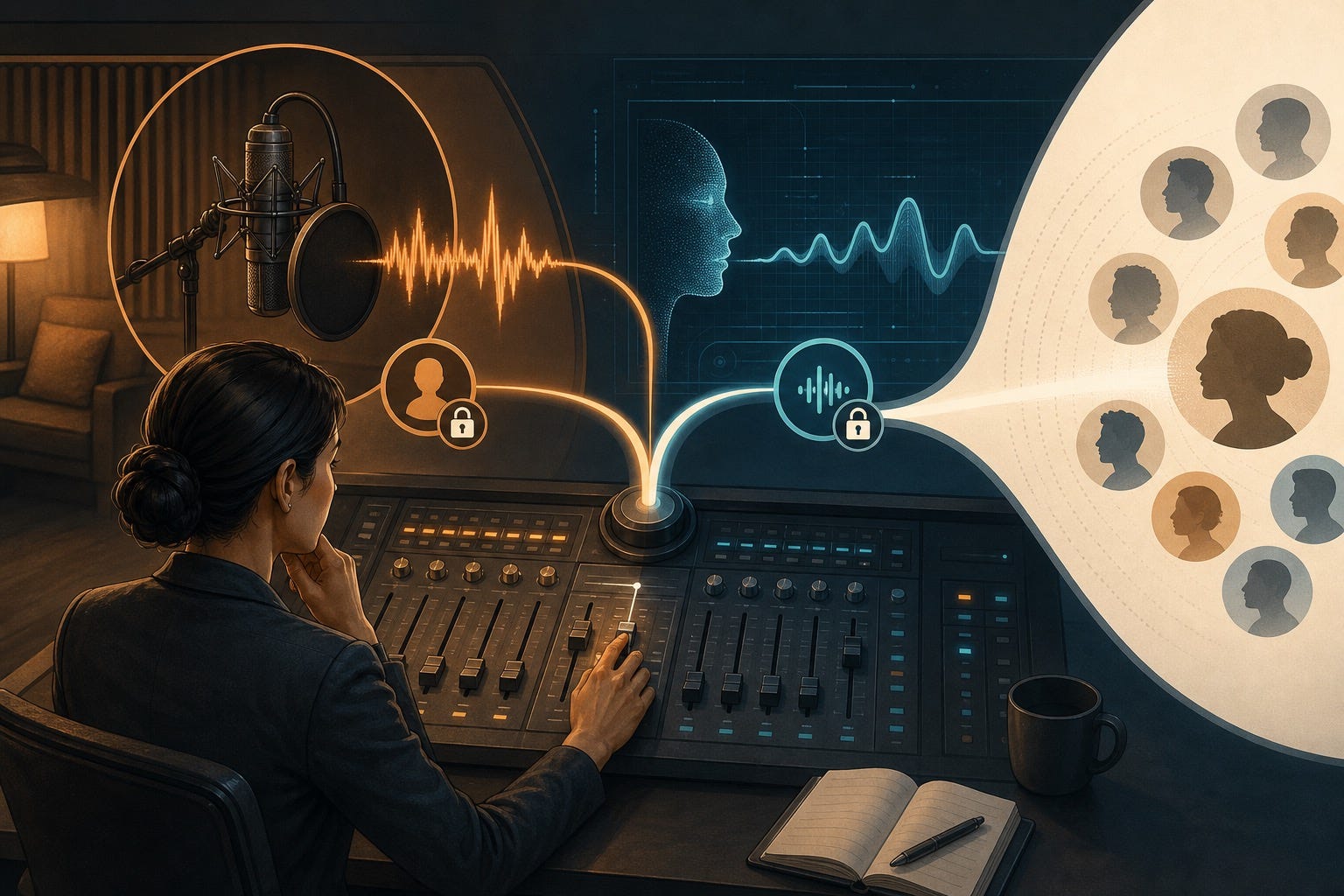
Your voice is becoming a brand asset. That does not mean you should automate it everywhere.
The strange new personal branding question is not, “Can AI sound like me?” In many cases, it can. The better question is, “Where would a synthetic version of my voice make people trust me less?”
That question matters because voice is intimate. It carries pace, hesitation, energy, warmth, confidence, and mood. When someone hears you explain an idea, they decide whether you sound like a person they would trust with a job, a deal, a collaboration, or a community.
AI voice clones for personal branding are tempting because they solve a real production problem. Founders want to publish short audio clips without recording ten takes. Consultants want to turn written insights into narrated posts. Creators want multilingual versions of their work. Executives want consistent presence across podcasts, videos, courses, and internal updates. Job seekers and students want clearer public proof that they can explain what they know.
But the trust risk is just as real. If your audience feels tricked, your voice clone does not scale your reputation. It scales suspicion.
This guide is a practical way to use AI voice cloning without turning your personal brand into a synthetic performance. The goal is not to sound perfect. The goal is to sound accountable.
Why Voice Cloning Is a Personal Branding Issue
Most people treat voice cloning as a content production tool. That is too narrow. For a personal brand, your voice sits inside your digital identity. It is part of how people recognize you, remember you, and decide whether your public presence feels real.
The market is moving quickly. Mordor Intelligence estimates the voice cloning market at $3.02 billion, and creator research from Epidemic Sound shows why trust matters: creators are worried about AI replicating voice and style, while transparency is becoming tied to audience confidence. Platforms are reacting too. YouTube’s guidance separates AI used for productivity from realistic synthetic content that can make a real person appear to say or do something they did not do.
For personal branding, voice cloning should not be judged only by output quality. It should be judged by context, consent, disclosure, and audience expectation.
The Trust Test: Should This Be Your Real Voice or Your Clone?
Before you use a cloned voice, ask what the listener believes they are hearing. Are they expecting a live thought? A personally recorded message? A polished narration? A translated version? A repeatable learning module? A synthetic ad read?
The same technology can be trustworthy in one context and damaging in another.
Use your real recorded voice when judgment is the product
If the audience is listening for your current judgment, record it yourself. This includes sensitive opinions, crisis communication, apologies, investor updates, hiring messages, leadership commentary, personal stories, and anything where tone is part of the meaning.
A founder explaining a hard decision should not sound like a perfectly smoothed narrator. A consultant giving a contrarian take should let the pauses stay. A job seeker explaining why a project failed should sound present. Those small imperfections are not defects. They are trust signals.
Use an AI voice clone when consistency is the product
A voice clone can make sense when the listener mainly needs clarity, consistency, and access. Examples include narrated blog posts, lesson summaries, evergreen explainers, product education, internal training, accessibility audio, short recap clips, and multilingual versions of content you already wrote and approved.
The key phrase is “already wrote and approved.” The clone should read your thinking, not invent your thinking. When the content comes from your real notes, real examples, and real decisions, the synthetic layer is production support. When the clone creates a confident performance around shallow or outsourced ideas, it becomes reputation theater.
Avoid voice cloning when the listener could reasonably feel deceived
Do not use a voice clone to create the impression of personal attention where there was none. A synthetic “personal” sales message, fake testimonial reply, fabricated podcast exchange, or automated networking voice note can feel efficient to the sender and manipulative to the receiver.
If the emotional value of the message comes from the listener believing you personally recorded it for them, be careful. That is where AI personal branding crosses from leverage into a trust problem.
A strong personal brand does not make every interaction sound polished. It makes important interactions feel owned.
A Practical AI Voice Clone Workflow
The best workflow is boring in the right places. It does not start with a tool. It starts with rules.
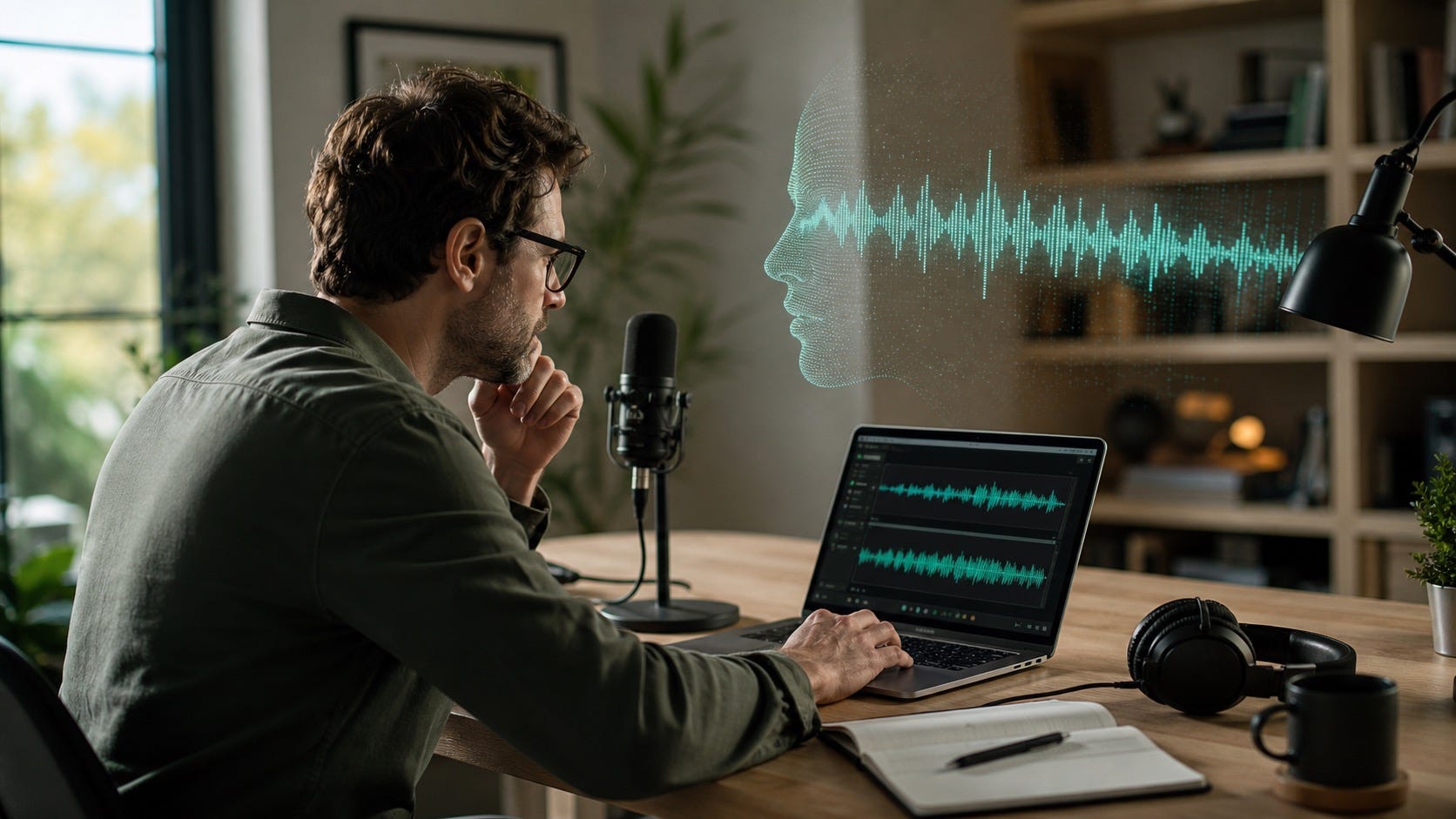
1. Define the allowed use cases
Write a short list of where your cloned voice may be used. Keep it specific. For example:
Narrating articles that I personally wrote or substantially edited.
Creating accessibility audio for public essays, guides, and educational posts.
Testing draft scripts before I record the final version myself.
Producing translations of approved material with clear synthetic audio disclosure.
Generating short social clips only after human review of the script and final audio.
Then write the banned use cases. This list matters more. Ban any use that could imply personal attention, real-time presence, private endorsement, live participation, or emotional intimacy that did not happen.
2. Build a voice source file
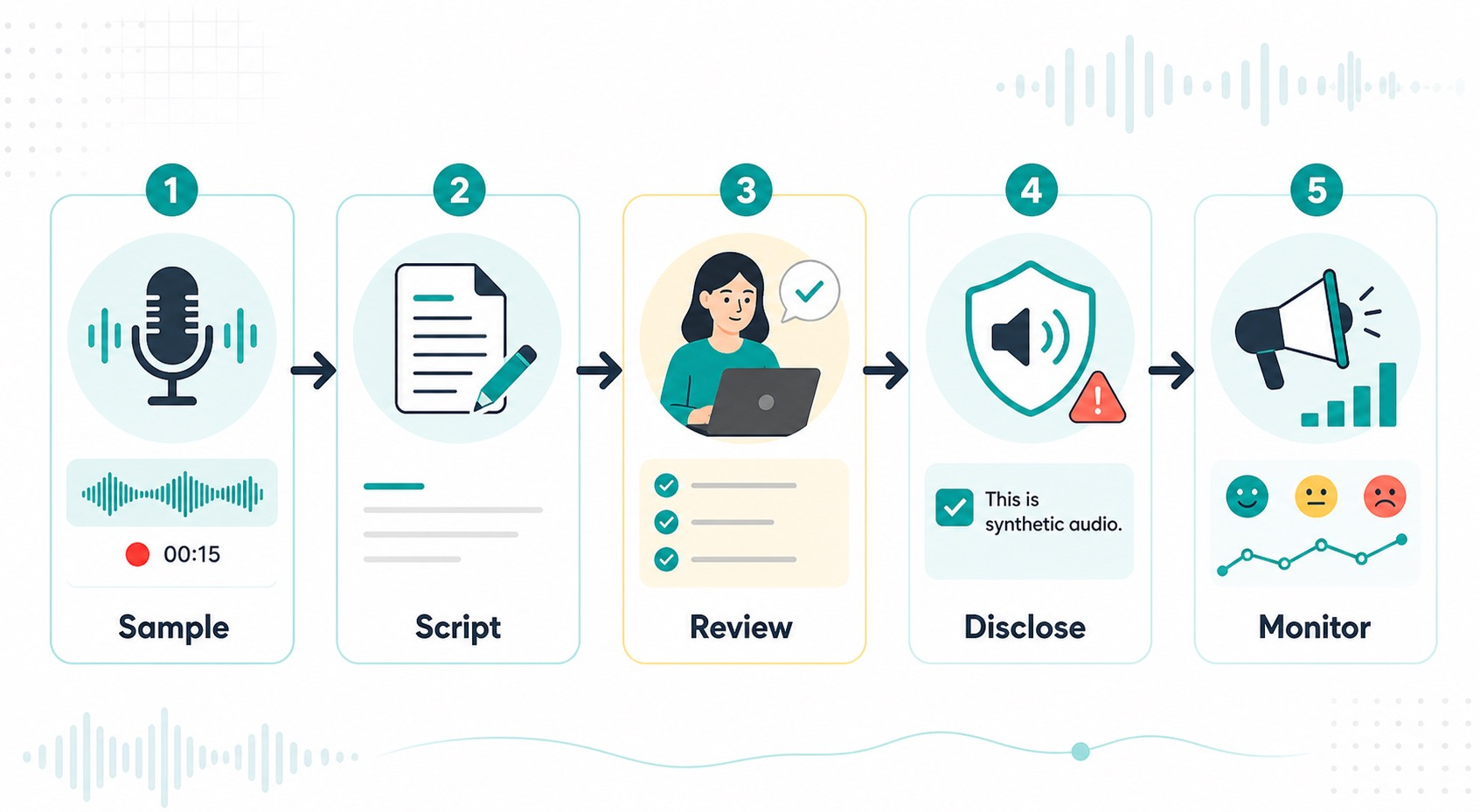
Do not feed a voice tool with random clips from calls, podcasts, or old videos. Create a clean source file on purpose. Record several minutes in a quiet space. Use your natural pace. Include the kinds of sentences you actually say: strategic points, examples, transitions, caveats, and short explanations.
Also record what you do not want. If you dislike hype, perform one or two overexcited lines and label them as examples to avoid in your notes. If you want to sound calm and direct, include that direction in your brand voice brief.
The point is not only technical quality. It is brand accuracy. A clone trained on your conference-stage voice may sound wrong for a thoughtful newsletter. A clone trained on casual calls may sound too loose for a board-facing memo. Capture the version of your voice that matches the channel.
3. Keep the script human-owned
AI can help you outline, tighten, translate, and vary phrasing. It should not decide what you believe. A safe workflow looks like this:
Start from a real note, transcript, client question, project insight, or talk outline.
Ask AI to turn it into a short narration script.
Add the specific details only you would know.
Remove generic claims that could belong to anyone.
Approve the final script before generating audio.
Here is a useful prompt:
Prompt: “Turn these notes into a 90-second narration script in my voice. Keep the argument specific. Preserve the examples. Avoid motivational filler, exaggerated certainty, and generic creator language. Add one clear disclosure sentence if the final audio is generated with my approved AI voice clone.”
Then run a second prompt as a quality check:
Prompt: “Act as a skeptical audience member. Identify any line that sounds too polished, too generic, too salesy, or potentially misleading if spoken by a synthetic version of my voice.”
4. Review the audio for reputation drift
Do not only listen for pronunciation. Listen for character. Does the clone make you sound more certain than you are? More cheerful than the topic deserves? More authoritative than the evidence supports? More intimate than the relationship allows?
That is reputation drift. It happens when synthetic polish changes the social meaning of the message. A sentence can be factually accurate and still sound wrong when delivered in a cloned voice.
Keep a simple review checklist:
Would I be comfortable saying this exact line on a live call?
Does the tone match the seriousness of the topic?
Is the audience likely to know this is synthetic if that matters?
Are any claims stronger than my evidence?
Could this audio be clipped out of context and damage trust?
How to Disclose Without Making It Weird
Disclosure does not have to sound like a legal warning. It can be simple and normal. The right disclosure depends on the channel and the expectation.
For a narrated article, try: “Audio version generated with my approved AI voice clone from an essay I wrote and edited.”
For a translated clip, try: “This is a synthetic translation of my original English commentary, reviewed before publishing.”
For an educational module, try: “Narration uses my licensed AI voice to make the lesson easier to update and access.”
For social content, put the disclosure close enough that a normal viewer will see it before they form the wrong assumption. Do not bury it in a policy page. The goal is not to punish yourself for using AI. The goal is to remove the feeling of being tricked.
FTC guidance on AI-enabled voice cloning is also a useful reminder: there is no magic AI exception to existing laws around deception, fraud, and impersonation. Even if your use case is innocent, the broader environment is noisy. Clear consent and disclosure help separate legitimate personal-brand use from the scams people are already worried about.
Where AI Voice Clones Actually Help a Personal Brand
The strongest use cases are not the loudest ones. They are the places where your audience benefits from more access to your thinking without needing you to perform from scratch every time:
Narrated essays and newsletters: audio versions of work you already wrote and approved.
Short explainers from real work: one-minute clips based on client lessons, product decisions, hiring insights, or technical breakdowns.
Multilingual presence: translated versions of approved ideas, reviewed for nuance and disclosed clearly.
Private rehearsal: synthetic drafts that help you hear weak logic, awkward phrasing, and inflated claims before recording the real version.
The difference between strong and weak AI voiceover is specificity. “Here is what I learned after reviewing 37 onboarding calls” sounds more credible than “In today’s fast-paced digital world, authenticity is key.”
What Not to Automate
Some parts of personal branding should stay stubbornly human because they carry relational weight.
Do not automate condolence messages, apologies, sensitive feedback, hiring rejections, investor reassurance, conflict resolution, client escalations, or personal outreach that pretends to be one-to-one. These moments are not content inventory. They are trust moments.
Also avoid using your clone to create a false sense of volume. A personal brand is not strengthened by being everywhere if being everywhere makes you feel less present.
Use AI to reduce friction around good judgment. Do not use it to hide the absence of judgment.
The Voice Clone Governance File
If your voice is becoming a reusable asset, treat it like one. Create a small governance file before you publish widely. It can be a one-page document with six sections:
Approved use cases: where your voice clone may be used.
Banned use cases: anything that implies live presence, private attention, or endorsement without review.
Disclosure rules: exact language for each channel.
Source ownership: where training audio came from and who has permission to use it.
Review process: who approves scripts and final audio.
Shutdown rule: when you pause use because quality, context, or audience trust has changed.
This is not bureaucracy. It prevents future confusion. If an assistant, editor, agency, or teammate helps with content, they should not guess what your voice is allowed to say.
A Simple Starter Plan
If you want to test AI voice cloning for creators or professional personal branding, start small. Record a clean source file, create your governance document, and choose one low-risk use case, such as private script rehearsal or an audio version of a previously published article.
Generate three short samples from real writing. Review them for tone, clarity, and reputation drift. Ask one trusted peer whether the audio sounds useful, strange, misleading, or recognizably you. Then publish one clearly disclosed audio asset and watch comments, replies, completion, saves, unsubscribes, and private feedback.
The most important signal is not whether people notice AI. It is whether they still feel they are hearing your judgment. If the clone improves access without weakening trust, add one more approved use case. If it makes your content feel less human, keep it as a private rehearsal tool.
The Real Advantage Is Not More Content
The obvious promise of AI voice clones is scale. More audio. More video narration. More languages. More clips. More channels.
That is useful, but it is not the deepest advantage.
The real advantage is learning how your ideas sound before the public hears them. A voice clone can become a mirror. It lets you test whether a thought is clear, whether your examples carry weight, whether your tone matches your intent, and whether your public identity is becoming sharper or more artificial.
Used carelessly, synthetic voice makes your personal brand feel mass-produced. Used carefully, it makes your real thinking more accessible while keeping the human parts human.
Your voice can scale. Responsibility cannot be outsourced.
FAQ
Are AI voice clones good for personal branding?
They can be good for personal branding when they make your real ideas more accessible, such as narrated articles, educational clips, translations, or private script rehearsal. They are risky when they imply personal attention, live presence, or emotional sincerity that was not actually there.
Should I disclose that I used an AI voice clone?
Disclose whenever a reasonable listener might assume the audio was personally recorded or live when it was actually synthetic. Simple disclosure usually works best, such as “Generated with my approved AI voice clone from a script I wrote and reviewed.”
What is the safest way to use AI voice cloning for creators?
The safest workflow is to clone only your own voice, use scripts based on your real work, review every final audio file, avoid sensitive one-to-one messages, and keep a written governance file that defines approved uses, banned uses, and disclosure language.
Can I use a voice clone for LinkedIn, Substack, or YouTube content?
Yes, but match the use to the audience expectation and platform rules. A narrated essay or clearly labeled educational clip is lower risk than a synthetic personal message. For YouTube, review the current altered or synthetic content disclosure rules before publishing realistic AI-generated audio or video.
Will an AI voice clone make my content sound fake?
It can if the script is generic, the tone is too polished, or the audio is used in the wrong context. The fix is not only a better tool. Use real examples, human-owned opinions, clear disclosure, and manual review for tone and credibility.
What should professionals avoid when using AI voice clones?
Avoid cloning anyone without explicit permission, creating fake endorsements, automating sensitive outreach, hiding synthetic audio in contexts where disclosure matters, or using a clone to publish more than your reputation can support. Trust is the constraint.
Sources: YouTube disclosure, YouTube synthetic content update, FTC voice guidance, Epidemic Sound, Mordor, and V.O.I.C.E.