


AI can help you post faster. It can also flatten your point of view, train your audience to ignore you, and make your personal brand feel interchangeable. Here is the playbook for using AI on LinkedIn without sounding generic, losing trust, or getting buried by a feed that is getting less tolerant of synthetic sameness.
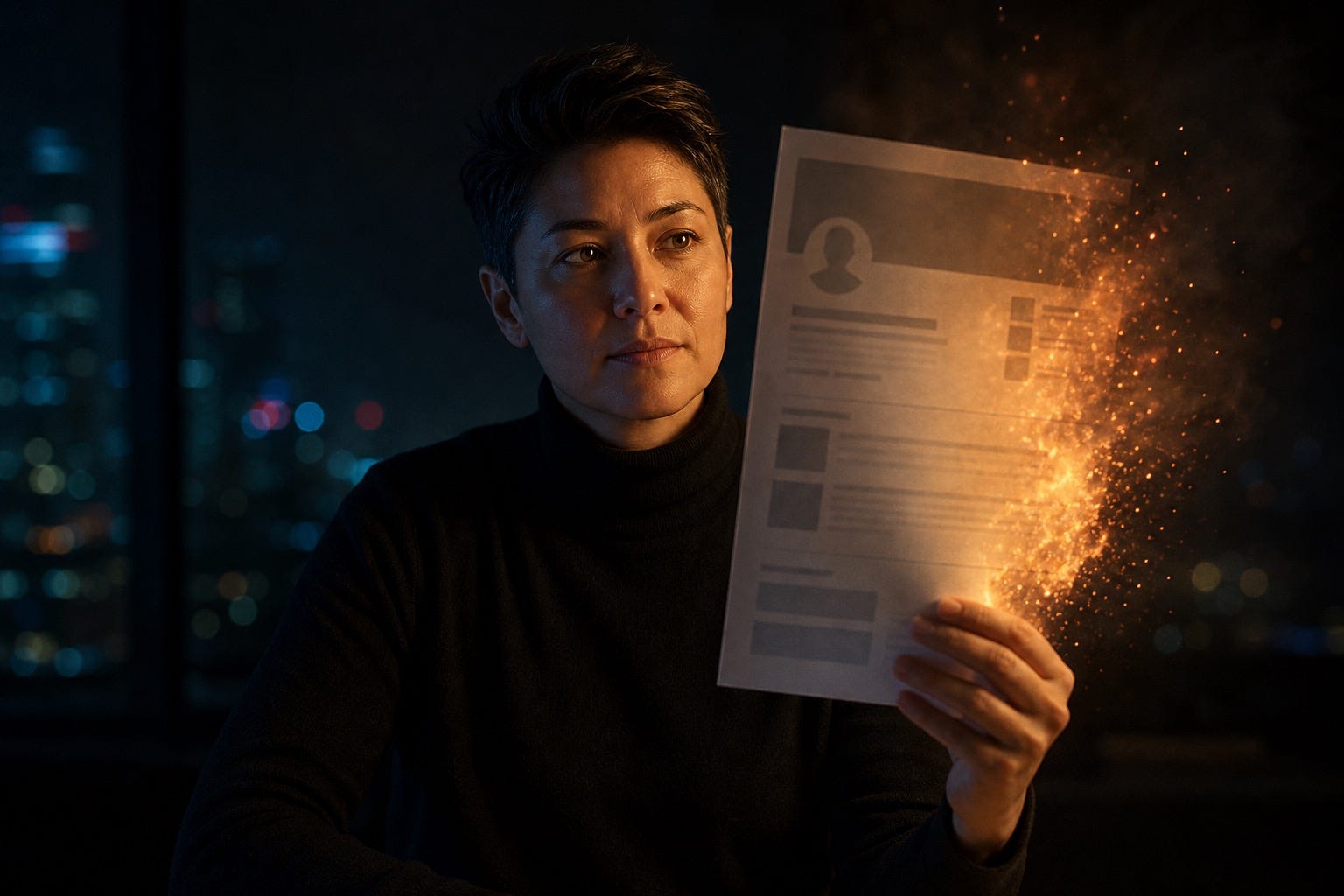
The problem is not that AI helps you write. The problem is when the tool becomes more visible than your thinking.
Most people still frame the LinkedIn question the wrong way. They ask, “Should I use AI for LinkedIn?” That is already outdated. The better question in 2026 is, “How do I use AI without making my personal brand feel mass-produced?”
That question became more urgent on May 20, 2026, when LinkedIn executive editor Laura Lorenzetti published Keeping conversations real on LinkedIn. The point was not anti-AI moralizing. It was much more practical: LinkedIn said content that appears AI-generated and lacks a clear perspective is less likely to be distributed beyond a person’s immediate network. LinkedIn also reiterated in its help documentation that AI should augment your expression, not replace it, and that high-volume automated activity can limit visibility.
That aligns with what people are reporting in the wild. In recent Reddit threads, marketers, founders, and ordinary LinkedIn users describe the same pattern: reach feels weaker, feeds feel more generic, and posts that sound polished but empty are easier to spot than ever. Whether or not you care about “the algorithm,” your readers already developed a strong instinct for content that has no lived point of view behind it.
If you are a founder, consultant, executive, creator, freelancer, job seeker, or technical professional, this matters for one reason above all: your personal brand is a trust asset. Once your audience starts classifying your writing as generic AI content, you are no longer building authority. You are training people to scroll past your name.
What “AI slop” actually means on LinkedIn
AI slop is not just “content made with AI.” Plenty of strong posts use AI for editing, structuring, headline testing, or idea expansion. The problem is a specific kind of output: polished language without real signal.
On LinkedIn, AI slop usually has five traits:
It sounds correct but says nothing you would remember an hour later.
It uses familiar structures everyone has seen before: fake epiphanies, generic lessons, or empty “it’s not X, it’s Y” contrasts.
It contains no field evidence: no client pattern, no product lesson, no hiring observation, no decision, no mistake, no tradeoff.
It could have been posted by almost anyone in your niche.
It feels optimized for appearance instead of usefulness.
A post can be grammatically clean, emotionally polished, and professionally formatted, yet still feel dead. People do not trust syntax. They trust specificity.
This is why generic AI posts often fail even before platform moderation enters the picture. The audience problem arrives first. Your readers can feel when a post was assembled from internet averages instead of your actual judgment.
Why generic AI content damages your personal brand faster than it damages your reach
Reach can recover. Reputation is harder.
When a professional account starts publishing obviously synthetic content, three things happen at once:
Your authority gets diluted. If your ideas sound like everyone else’s, your market stops associating you with a clear perspective.
Your trust signals weaken. People wonder whether your expertise is real, current, or borrowed.
Your differentiation disappears. In an AI-heavy feed, sounding “professional” is no longer an advantage. It is baseline noise.
This is especially dangerous for personal brands built around expertise rather than entertainment. Founders need conviction. Consultants need clarity. Executives need judgment. Job seekers need credibility. Creators need recognizable voice. Those are exactly the things generic AI tends to flatten.
Simple rule: if a post makes you look efficient but not insightful, it is hurting your personal brand.
The new standard: use AI as an editor, not as your substitute
The safest way to use AI on LinkedIn now is to treat it as a thinking amplifier, not a content vending machine.
That means the raw material must come from you first. AI can help turn rough material into sharper writing, stronger structure, better hooks, and cleaner phrasing. But AI should not be the source of the perspective.
Here is the workflow I recommend.
1. Start with a real opinion, observation, or friction point
Do not prompt from a blank page with “write me a LinkedIn post about leadership” or “write a founder post about AI.” That is how you get statistically average content.
Start with one of these instead:
A decision you made this week and why you made it
A pattern you keep seeing with clients, candidates, customers, or your team
A mistake that changed your process
A belief you disagree with in your industry
A tiny lesson from actual work that most people miss
If you cannot point to a real-world source for the post, you probably do not have a post yet. You have a topic.
2. Give AI your notes, not your job
Feed AI messy material: bullet points, screenshots of your own notes, a rough voice memo transcript, three client objections, one sharp opinion, one example, and one sentence about who the post is for.
Then ask AI to organize, compress, or sharpen. Good prompts at this stage sound like:
“Turn these raw notes into three post angles without adding facts or generic lessons.”
“Rewrite this in a more direct tone while preserving my point of view.”
“Cut anything that sounds inflated, cliché, or too broad.”
“Find the strongest hook in these notes, but keep the language grounded.”
Bad prompts ask the model to invent authority you did not supply.

The highest-leverage use of AI is editorial compression: tighten the signal, do not outsource the signal.
3. Add proof before polish
Before you let AI refine the language, force one proof element into the draft:
A metric
A short story
A customer phrase
A screen-level example
A specific tradeoff
Proof is what makes a personal brand believable. Anyone can produce polished advice. Fewer people can say, “Here is the decision we made on Tuesday, what we expected, what actually happened, and what I changed after that.”
4. Run a “could anyone have posted this?” test
Before publishing, read the draft and ask one brutal question: could a smart stranger in my industry post this word for word?
If the answer is yes, it is still too generic.
Usually the fix is not more style. It is more ownership. Add your timeline, your context, your disagreement, your risk, your customer, your operating constraint, or your lesson learned too late.
5. Keep the fingerprints of thinking
A lot of people over-edit AI drafts until they sound smooth and empty. Resist that. Real professionals do not speak in sterile symmetry all the time. They make distinctions. They qualify. They reveal tradeoffs. They sometimes leave a little edge in the sentence when the edge reflects an actual belief.
You are not trying to sound less intelligent. You are trying to sound less synthetic.
What to post instead of generic AI thought leadership
If your current content system depends on abstract advice, replace some of it with formats that naturally produce trust.
Use these formats more often
Decision memos: what you chose, what you rejected, and why.
Pattern posts: three repeated mistakes or behaviors you keep seeing in your work.
Before-and-after process posts: how your workflow changed after a lesson.
Mini case studies: one concrete result, one constraint, one insight.
Contrarian clarifications: not hot takes for attention, but clean corrections to bad industry assumptions.
These formats work because they are harder to fake. They carry lived texture. That is what audiences remember, and it is what answer engines, search surfaces, and referral conversations are more likely to interpret as real expertise rather than content wallpaper.
A safe AI workflow for LinkedIn personal branding
If you want a simple repeatable system, use this four-part sequence:
Capture: save voice notes, objections, meeting insights, product lessons, and contrarian thoughts during the week.
Distill: choose one insight that only you could explain in this exact way.
Shape with AI: ask for three hooks, a tighter structure, and a cleaner ending without adding invented authority.
Human pass: cut clichés, add proof, restore your phrasing, and remove any sentence you would not actually say in conversation.
That last step is the one most people skip. It is also the step that protects your personal brand.

The goal is not to sound unassisted. The goal is to make your judgment impossible to mistake for a template.
The real advantage now is not speed. It is recognizability.
AI lowered the cost of producing acceptable writing. That means acceptable writing is now cheap. The scarce thing again is recognizability.
When someone sees your name in the feed, they should start expecting a kind of insight from you. Maybe you are the operator who explains tradeoffs clearly. Maybe you are the consultant who turns messy client situations into useful frameworks. Maybe you are the founder who writes honestly about market reality without pretending every week is a breakthrough.
That is personal branding in the AI era. Not louder branding. Clearer identity.
So yes, keep using AI. Use it to compress drafts, test openings, clean structure, pull patterns from your notes, and surface blind spots in your argument. But stop asking it to manufacture a professional self on your behalf. The strongest LinkedIn brands in 2026 will not be the people who avoid AI completely. They will be the people who keep their actual judgment visible inside AI-assisted work.
That is the line between leverage and slop.
FAQ
Can LinkedIn detect AI-generated posts?
LinkedIn has publicly said it is rolling out systems that reduce distribution for content that appears AI-generated and lacks a clear perspective. The practical takeaway is simpler than the detection debate: generic, low-signal posts are now riskier for both reach and trust.
Is it bad to use ChatGPT for LinkedIn posts?
No. The issue is not tool usage. The issue is whether the final post reflects your voice, your perspective, and your evidence. Using AI as an editor is far safer than using it as a substitute for original thinking.
How do I humanize AI-generated LinkedIn content?
Add lived context. Include a real decision, a concrete example, a customer phrase, a tradeoff, or a disagreement. Then remove any sentence that feels generic enough to belong to anyone else in your niche.
What kind of LinkedIn posts are safest for personal branding in 2026?
Posts grounded in real work are safest: mini case studies, decision breakdowns, pattern recognition posts, behind-the-scenes lessons, and informed opinions tied to actual experience.
How often should I use AI in my LinkedIn content workflow?
Use it often for drafting support, structure, headline testing, and editing. Use it sparingly for generating substance. Frequency is not the main issue. Dependence on generic output is.
What is the fastest way to tell if a post sounds like AI slop?
Ask whether the post contains a real stake. If there is no actual decision, proof, tension, example, or point of view in it, readers will likely experience it as polished filler.