


Over the last two days, the LinkedIn video conversation got a lot sharper. On May 5, 2026, a widely discussed analysis argued that video views on LinkedIn were falling year over year even as the platform kept promoting video harder. On May 6, 2026, fresh commentary on recent LinkedIn changes pointed in the same direction: surface-level reach is less dependable, and weak videos burn out fast.
That does not mean professionals should stop using video. It means the old playbook is breaking.
If your strategy depends on random reach, trend-chasing, or polished clips with no clear point, you are exposed. If your strategy is a real LinkedIn video portfolio, a library of short, useful, authority-building videos tied to your expertise, you are in a much stronger position.
The shift is simple: LinkedIn is rewarding proof of expertise, not just the existence of video. Professionals who treat video as a searchable portfolio asset will beat professionals who treat it as another social media format.
Why a LinkedIn video portfolio matters more now
A LinkedIn video portfolio is not a showreel. It is not a hype montage. It is a structured collection of videos that show how you think, what you know, and how you solve problems.
That matters because LinkedIn is now caught between two realities. On one side, the company keeps investing in creators and video. Its own product and marketing updates still frame video as a high-value format for professional influence and business results. On the other side, more creators are publishing, more brands are competing, and the feed is getting stricter about what deserves attention.
In that environment, a weak video post disappears. A useful video asset keeps paying off.
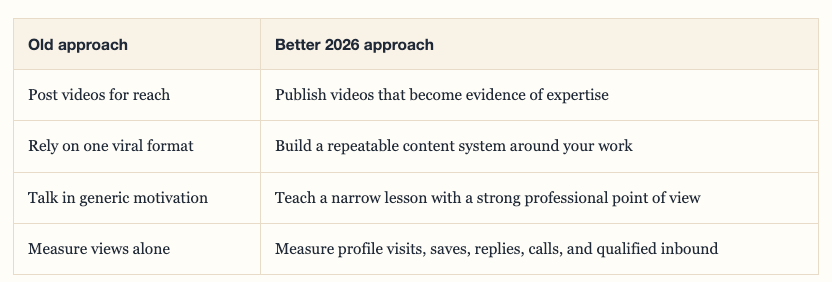
The professionals who win on LinkedIn in 2026 are not the ones posting the most video. They are the ones making the clearest case for why they should be trusted.
What goes inside a strong AI video portfolio
The phrase AI video portfolio sounds futuristic, but the practical version is grounded. You use AI to speed up scripting, structuring, repurposing, editing, and presentation. You do not use AI to fake depth you do not have.
Most professionals only need four video asset types.
1. Authority clips
These are 30 to 90 second takes on problems you solve repeatedly. A consultant might explain why a dashboard failed. A founder might explain why buyers ignore certain product demos. A job seeker might explain the hardest constraint in a project they owned.
2. Proof clips
These turn outcomes into stories. Show the before, the decision, and the result. Numbers help. So do constraints. The more grounded the example, the stronger the trust signal.
3. Process clips
These let people see how you work. This is where AI becomes especially useful. Instead of filming everything from scratch, you can turn outlines, case notes, or slide fragments into short explainers.
4. Positioning clips
These answer the bigger question: what do you believe that others in your field miss? Strong positioning is what separates a useful professional from a memorable one.
How to build a LinkedIn video portfolio in one afternoon
You do not need a production team. You need source material, a clean structure, and enough consistency to build recognition.
Step 1: Collect raw professional proof
Start with material you already have.
Project summaries
Client questions
Sales objections
Interview stories
Internal notes from work you solved
Slide decks, documents, and screenshots
If you are a job seeker, this is especially important. A traditional resume tells recruiters what you did. A video portfolio shows how you think. In a hiring market where candidates are increasingly filtered by automation, that difference is not cosmetic. It is strategic.
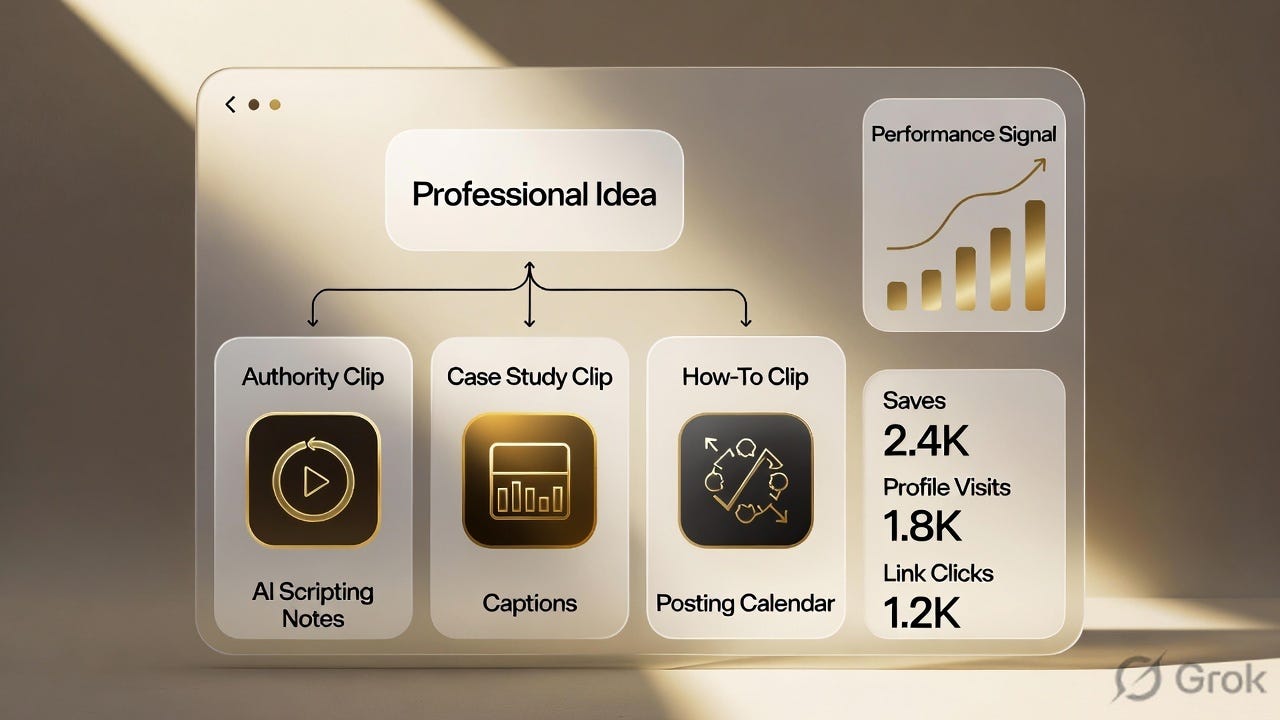
Step 2: Convert one idea into multiple post angles
One strong idea should become at least three video angles.
A short insight
A mini case study
A tactical how-to
For example, if you improved onboarding at work, your three clips could be:
Why most onboarding videos lose attention in the first 10 seconds
How we cut support questions by changing one setup screen
The script template I use before recording any product walkthrough
Step 3: Use AI to speed the system, not replace judgment
AI is valuable when it reduces friction. It is not valuable when it produces smooth nonsense. Use it for draft scripts, caption variations, visual sequence ideas, and reformatting long notes into tight speaking points.
If you want to turn a resume, script, or pitch deck into a polished first-pass video quickly, tools like portfoliovideo.com can reduce production time because they generate scenes, narration, and professional structure from source material you already own.
Step 4: Publish for retention, not vanity
The first three seconds still matter. But the real goal is not just to stop the scroll. It is to make the right person stay long enough to understand your value.
A useful opening formula is:
Name a real problem
State the surprising truth
Deliver one practical shift
Example: Most founder demo videos fail before the product appears. The problem is not confidence. It is that the first sentence describes the company instead of the buyer’s pain. Here is the fix.
Step 5: Track signals that actually matter
Most professionals still watch view counts too closely. Better signals are:
Saves from relevant people
Profile visits after specific posts
Inbound messages that mention a video
Meeting requests
Recruiter responses
Newsletter signups or replies
A practical AI workflow for weekly publishing
If you want your content engine to survive a busy schedule, make the system mechanical. The creativity should go into the ideas. The production steps should feel routine.
{
  "source_asset": "client call note or project summary",
  "angle_1": "hard lesson learned",
  "angle_2": "framework or checklist",
  "angle_3": "before and after result",
  "hook_rule": "start with tension, not biography",
  "target_length_seconds": 45,
  "cta": "invite a reply with a specific problem"
}
You can use that structure every week. Feed in one real work artifact, generate three angles, trim the language until it sounds like you, then batch record or batch generate supporting visuals.
The biggest mistakes professionals are making right now
They are publishing content with no searchable identity
If your videos could have been posted by anyone in your industry, they will not build authority. Repetition of theme matters. You want people to associate you with a narrow set of valuable problems.
They confuse polish with trust
Over-produced video can feel less credible on LinkedIn than a clear, concise explanation delivered with conviction. Professionals are not looking for entertainment first. They are looking for signal.
They post disconnected clips instead of building a portfolio
A single good video can help. A system of related videos compounds. When someone visits your profile after one strong post, they should immediately find more proof that you know your area.
They let AI flatten their voice
The fastest way to lose trust is to sound like every other AI-assisted creator. Keep your own phrasing. Keep your own examples. Keep your own opinions, especially the ones you can defend.

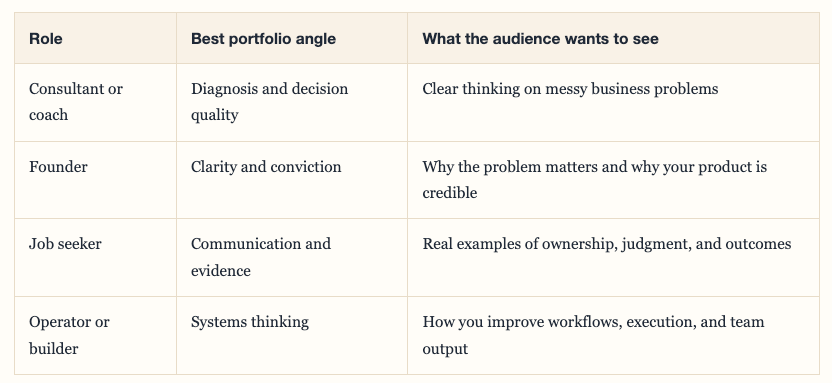
What this looks like for job seekers in 2026
The hiring market has become weirder, more automated, and more crowded. More candidates are using AI to write resumes. More employers are using AI to screen, rank, or interview them. That pushes smart candidates toward a simple question: what can I publish that proves I am more than a document?
A video portfolio is one of the strongest answers.
Not because every recruiter wants one. They do not. But because the right recruiter, manager, or referral source can understand you faster when they can hear how you frame a problem and explain a result.
If you are early in your career, do not wait until you have ten case studies. Start with three clips:
The toughest problem you solved in school, freelance work, or an internship
A short breakdown of a tool, process, or workflow you know well
A point of view on how your field is changing because of AI
That alone gives you a stronger professional signal than another keyword-stuffed summary paragraph.
A 30-day LinkedIn video portfolio plan
If you want a realistic starting plan, do this for four weeks.
Week 1: Publish two authority clips and one proof clip
Week 2: Publish one process clip and two response videos based on comments or questions
Week 3: Turn your strongest post into a deeper case study
Week 4: Review which topics brought profile visits, replies, and qualified interest, then double down
The point is not to flood the feed. The point is to build a body of work that tells a coherent professional story.
Final thought
LinkedIn’s latest shifts are a useful warning. Easy video reach is not a strategy. Real authority is.
If you build a LinkedIn video portfolio around actual expertise, useful specificity, and a repeatable AI-assisted workflow, you are no longer depending on one lucky post. You are creating professional assets that recruiters, buyers, collaborators, and clients can discover, trust, and remember.
That is why the winners in 2026 will not be the loudest creators. They will be the clearest professionals.