



Authenticity is powerful, but only when it is edited with judgment. Here is a practical AI workflow for choosing what to share, what to reshape, and what to keep private.
Most personal branding advice skips the hardest question: where does useful authenticity end and oversharing begin?
That question matters more now because AI has made polished public expression cheap. Anyone can generate a vulnerable-sounding LinkedIn post, founder story, newsletter intro, or bio in minutes. But the easier it becomes to publish, the more your audience looks for judgment. They are not only asking, “Is this well written?” They are asking, “Should this have been shared at all?”
The answer is not to become stiff, private, or corporate. A useful personal brand still needs real stories. Your audience needs to understand how you think, where your standards come from, and what kind of work you are trusted to do. But you need a boundary system before you need a content system.
This article gives you that system. Use AI as a thinking partner, not a confessional booth. Let it help you sort stories by audience value, privacy risk, professional relevance, and future regret. Then make the final call yourself.
Why Boundaries Are Becoming a Personal Branding Skill
Personal branding used to reward visibility. The simple advice was to post more, be human, tell stories, and show the person behind the work. That advice still has value, but the feed has changed.
Professionals are surrounded by AI-written “lessons,” exaggerated founder vulnerability, performative career posts, and oddly intimate stories designed for engagement more than trust. Recent Reddit conversations around LinkedIn and business social media show the same anxiety again and again: people want to be more human online, but they do not want to look cringe, manipulative, unprofessional, or exposed.
The broader market is moving in the same direction. LinkedIn notes that 82% of B2B marketers say creators increase credibility with decision-makers. Kit found that 57.3% of creators use AI tools daily, while 89.2% always review and edit AI output before using it. Edelman reports that 7 in 10 people globally are unwilling or hesitant to trust someone different from them.
Put those signals together and the lesson is simple: trust is harder to earn, AI is everywhere, and audiences are sensitive to anything that feels synthetic or needy. Personal brand boundaries are a credibility strategy.
The Boundary Problem AI Can Help With
AI is useful here because it can slow down your publishing impulse. It can ask, “Who benefits from this?” It can flag details that may create privacy issues. It can help you turn a raw memory into a useful professional lesson without draining the life out of it.
What AI cannot do is decide your values. It cannot know how much you want your family, health, finances, clients, colleagues, or failures to become part of your public identity. If you outsource that judgment, you may get content that performs for a week and follows you for years.
Think of AI as a boundary-check assistant. Its job is not to make you more exposed. Its job is to help you become more precise.
The goal is not to share more personal details. The goal is to share the right evidence of your judgment.
The Three-Zone Model: Public, Professional, Private
Before you ask AI to help, divide your stories into three zones.
Zone 1: Public
Public stories are safe to repeat widely. They can appear on LinkedIn, Substack, podcasts, panels, bios, websites, and interviews. They reveal something real about your work without depending on secrets, unresolved pain, or someone else’s private details.
Examples include a lesson from shipping a difficult project, a mistake you now have a useful framework for, a client pattern with identifying details removed, or a work habit that explains your standards.
Zone 2: Professional
Professional stories are useful, but they need shaping. They may involve a client, employer, team conflict, family context, health issue, financial pressure, or insecurity. The story might be shareable after you remove names, focus on your own lesson, and avoid making another person the villain.
This is where AI helps most. It can identify what is essential to the lesson and what is only there because the story still feels emotionally hot.
Zone 3: Private
Private stories should not become public content right now. They may involve consent, legal risk, confidential work, unresolved trauma, details your future self may regret sharing, or a story that creates sympathy but does not serve your audience.
Keeping a story private does not make you less authentic. It means you understand that your personal brand is not a live stream of your inner life. It is a curated public record of your judgment, usefulness, and trustworthiness.
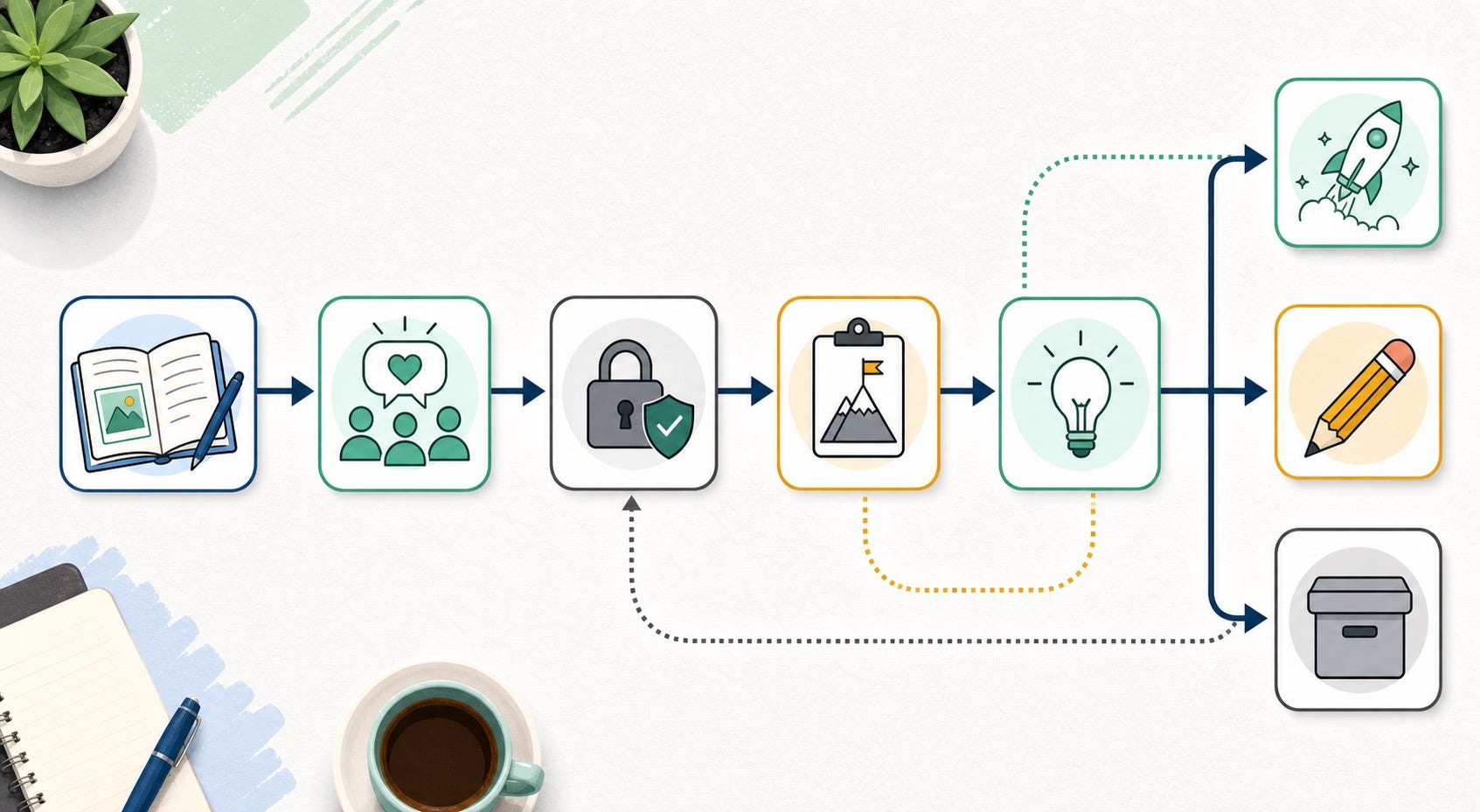
Use AI to create friction before publishing, not to remove all friction from publishing.
The AI Boundary Check Prompt
Use this prompt before turning a personal experience into a post, essay, talk, bio, or profile section. Paste the story in rough notes, not polished prose. You want AI to evaluate the raw material before it becomes persuasive.
Prompt: I am considering using the story below for my personal brand. Act as a careful editor and reputation advisor. Do not rewrite it yet. First, evaluate it across five factors: audience value, professional relevance, privacy risk, consent risk, and future regret risk. Then classify it as public, professional but needs reshaping, or private for now. Explain what details should be removed, blurred, or reframed. Finally, suggest three safer angles that preserve the useful lesson without oversharing.
After AI responds, do not accept the classification blindly. Look for the parts that make you uncomfortable. Sometimes discomfort means the story is powerful. Sometimes it means the story is not ready. The difference is whether the audience gets a useful takeaway or simply gets access to your private life.
The Five Tests Every Personal Story Should Pass
A personal story does not need to be dramatic to build a personal brand. It needs to pass five tests.
1. The Audience Value Test
Ask: what will a specific reader be able to do, understand, avoid, or decide after reading this?
If the answer is “they will know me better,” keep going. That is not enough. A strong personal brand story helps the reader see themselves, their work, or their decision more clearly. Your experience is the doorway. Their benefit is the room.
2. The Relevance Test
Ask: does this story connect to the professional reputation I am building?
A founder can write about endurance training if it reveals discipline or leadership under pressure. A consultant can write about parenting if it leads to a useful point about communication, boundaries, systems, or patience. But the connection must be real. If the professional lesson feels glued on at the end, the post will read as attention bait.
3. The Consent Test
Ask: does this story rely on someone else’s private experience?
AI can help anonymize details, but anonymizing is not a magic shield. If a colleague, client, employee, family member, student, or friend would recognize themselves and feel exposed, pause. Remove the story, ask permission, or rewrite it around your own decision instead of their behavior.
4. The Temperature Test
Ask: am I sharing this from clarity or from emotional heat?
Some stories need time. A layoff, conflict, failure, public criticism, or business setback might eventually become useful. But if you are still trying to win the argument, prove someone wrong, or process the event in public, archive the draft. Your future credibility is worth more than today’s release valve.
5. The Screenshot Test
Ask: would I be comfortable seeing this quoted without context by a client, recruiter, investor, student, employer, or journalist?
This test sounds harsh because the internet is harsh. Your personal brand is searched, summarized, screenshotted, forwarded, misread, and sometimes pulled into AI-generated summaries. If the sentence cannot travel well, rewrite it.
How to Turn Oversharing Into Useful Storytelling
The difference between oversharing and useful storytelling is not how personal the topic is. It is how much control you have over the lesson.
Oversharing says: “Here is everything that happened to me.”
Useful storytelling says: “Here is one experience, the decision it forced, the mistake I made, the principle I now use, and why it might help you.”
That structure works because it moves the reader from access to insight. They are being given a practical lens, not asked to reward your vulnerability.
Use this simple AI prompt when a draft feels too exposed:
Prompt: Rewrite this story so it keeps the useful lesson but removes unnecessary private details. Make the focus my decision, tradeoff, or standard, not emotional drama. Preserve plain language. Avoid exaggerated vulnerability, generic inspiration, and claims I did not prove.
Then compare the before and after version. If the edited version still feels human and useful, you probably had a publishable story. If removing private details makes the whole piece collapse, the story was relying on exposure instead of insight.

Oversharing gives people access. Useful storytelling gives them a lesson they can trust.
A Practical Boundary Map for Different Audiences
Your boundaries should change based on who you serve. A founder, job seeker, executive, student, freelancer, consultant, and creator do not need the same public self.
Founders
Share founder stories that explain judgment: why you chose a market, what customer pattern changed your mind, how you handled a constraint, or what you are learning from building. Be careful with investor drama, employee conflict, customer complaints, and personal sacrifice stories that make the company seem unstable.
Executives
Share principles, leadership tradeoffs, decision frameworks, and moments that shaped your operating style. Avoid turning every leadership lesson into a polished morality tale. Executive presence improves when your stories show calm responsibility, not constant self-mythologizing.
Consultants and Freelancers
Share client patterns without exposing clients. Talk about the problem type, the mistaken assumption, the process you used, and the result category. Never make a client look foolish to make yourself look smart.
Job Seekers and Students
Share project lessons, learning curves, constraints, experiments, and moments where you changed your thinking. Avoid posting desperation, resentment toward hiring teams, or private life details that distract from your capability. You can be honest without making your job search your whole identity.
Creators and AI Builders
Share your workflow, taste, sources, experiments, and editorial standards. Because audiences are becoming more skeptical of AI, be clear about where AI helped and where your own judgment entered. Recent creator backlash around AI use, covered by Business Insider, is a reminder that disclosure without judgment is not enough. People want to know that a real person is still accountable for the work.
Build a Personal Brand Boundary Doc
If you use AI often, create a short boundary doc and paste it into your writing workflow. This prevents every new chat from treating you like a blank slate.
Your boundary doc should include:
Share publicly: work lessons, decisions, frameworks, project insights, career turning points with emotional distance.
Edit first: mistakes, conflict, client patterns, personal context, failure, uncertainty, behind-the-scenes stories.
Keep private: other people’s stories, confidential work, unresolved disputes, health details, family details, finances, legal issues, private messages.
Voice standards: plain, specific, useful, evidence-based, never exaggerated for drama.
Approval rule: if a story involves another person, sensitive work, or strong emotion, wait 24 hours.
This document gives AI your standards before it gives you words. It also protects you from a common AI writing failure: making every story sound bigger, cleaner, and more universal than it is.
A Weekly AI Workflow for Safer Personal Storytelling
Once a week, spend 20 minutes reviewing possible stories. Start by asking, “What happened this week that taught me something useful?”
List five real moments from your week: a decision, mistake, conversation, surprising question, tradeoff, or small win.
Ask AI to classify each moment as public, reshape, or private for now.
Pick one public or reshaped story and ask AI for three angles: practical lesson, contrarian insight, and behind-the-scenes process.
Choose the angle with the clearest reader benefit.
Ask AI to remove private details, unsupported claims, and generic inspiration.
Read the final draft aloud and apply the screenshot test.
This routine changes the role of AI. Instead of mass-producing personal-sounding posts, you use it to protect what becomes public. That is the difference between visibility and reputation.
The Bottom Line
A strong personal brand is not built by becoming more exposed. It is built by becoming more legible, useful, and trustworthy over time.
AI can help you find the lesson inside your experience, but it should not pressure you into turning every private moment into content. The best personal brand boundaries create freedom. You stop wondering whether authenticity means sharing everything. You know what belongs in public, what needs reshaping, and what deserves to stay yours.
That is how you build a public identity people can trust without giving the internet unlimited access to your private life.
FAQ
What are personal brand boundaries?
Personal brand boundaries are the rules you use to decide what parts of your life, work, opinions, and stories belong in public. They help you share enough to build trust without exposing details that create privacy risk, reputation risk, or future regret.
How can AI help with personal brand boundaries?
AI can review a story before you publish it, flag privacy or consent concerns, identify the useful professional lesson, and suggest safer ways to frame the experience. It should assist your judgment, not replace it.
Is sharing personal stories on LinkedIn unprofessional?
Not automatically. Personal stories can be very effective when they connect to a clear professional lesson, help the audience, and protect other people’s privacy. They become unprofessional when they rely on drama, vague inspiration, confidential details, or emotional dumping.
What is the difference between authenticity and oversharing?
Authenticity shows real judgment, values, and experience in a way that serves the reader. Oversharing gives people access to private details without a clear benefit. The test is whether the story creates useful insight or only reveals personal information.
Should founders share personal struggles as part of their brand?
Founders can share struggles when the story has emotional distance, protects employees and customers, and explains a useful principle. If the story makes the company look unstable, exposes private people, or is still unresolved, wait or reshape it.
What should I never share in a personal brand post?
Avoid confidential client information, private messages, legal disputes, unresolved workplace conflict, identifying details about other people, sensitive family or health information, and anything you would not want quoted out of context by a future client, recruiter, employer, investor, or journalist.