


Most professionals wait until a podcast host, event organizer, journalist, client, or partner asks for materials. That is too late. A strong personal brand media kit gives people a clean, fast way to understand who you are, what you do, and why they should trust you.
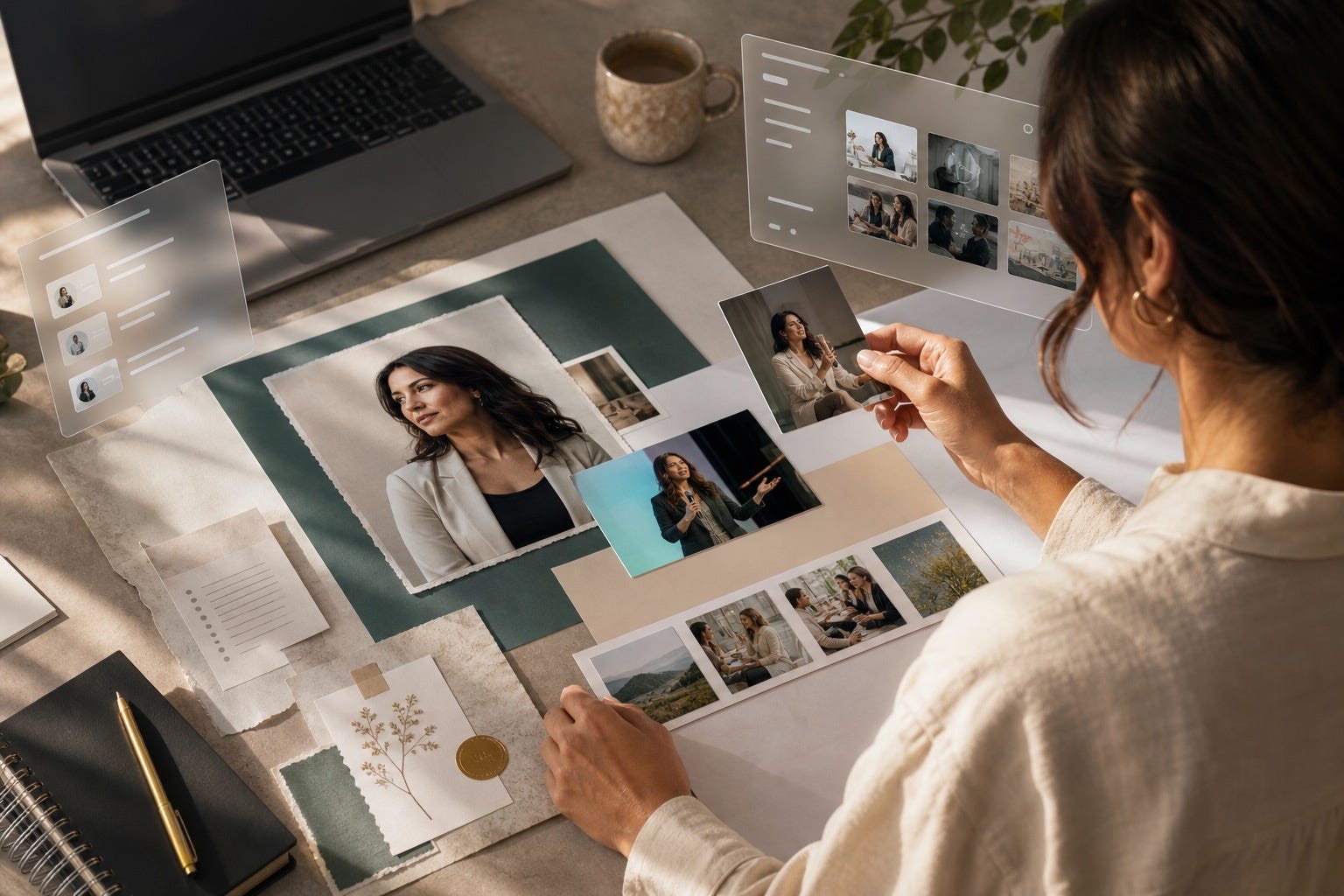
There is a new trust problem in personal branding. AI makes it easier to publish polished profiles, polished bios, polished posts, and polished headshots. It also makes it easier to sound interchangeable. The result is that more professionals look finished on the surface while feeling unproven underneath.
That is why a personal brand media kit matters now. It packages the evidence behind the image. Instead of forcing someone to search your LinkedIn, website, podcast clips, testimonials, speaking topics, and work samples one by one, you give them a single credibility layer they can scan in minutes.
This is especially useful for founders, consultants, creators, executives, freelancers, and technical experts who get opportunities asynchronously. A journalist may research you before emailing. A podcast producer may compare you with six other guests. A client may skim your materials before deciding whether to book a call. In those moments, the question is not whether you are talented. The question is whether your proof is easy to understand.
Your media kit should reduce uncertainty. If it creates more questions than answers, it is not doing its job.
What a personal brand media kit actually is
Most people hear “media kit” and think of influencers sending sponsorship PDFs. That is too narrow. A personal brand media kit is simply a compact trust asset that explains your positioning, proof, audience fit, and usable assets for different opportunities.
For a founder, it can help with podcasts, press outreach, partnerships, investor intros, and event invitations. For a consultant, it can support sales conversations, workshop bookings, and referrals. For a creator or expert, it can help brands, hosts, collaborators, and conference organizers quickly understand your value.
The best version feels less like self-promotion and more like decision support. It helps the other person say yes faster because it removes friction.
Why this asset is suddenly more important
Three shifts are pushing this from optional to useful.
AI has lowered the cost of looking polished. That means visible proof matters more than polished language.
More opportunities start with research, not conversation. People form opinions before the first call.
Trust signals are becoming more machine-readable. Verified credentials, clear bios, consistent positioning, and well-structured proof are easier for platforms and people to interpret than vague brand claims.
In practical terms, that means your reputation now depends on packaging as much as presence. It is not enough to be good. Your evidence has to travel well.
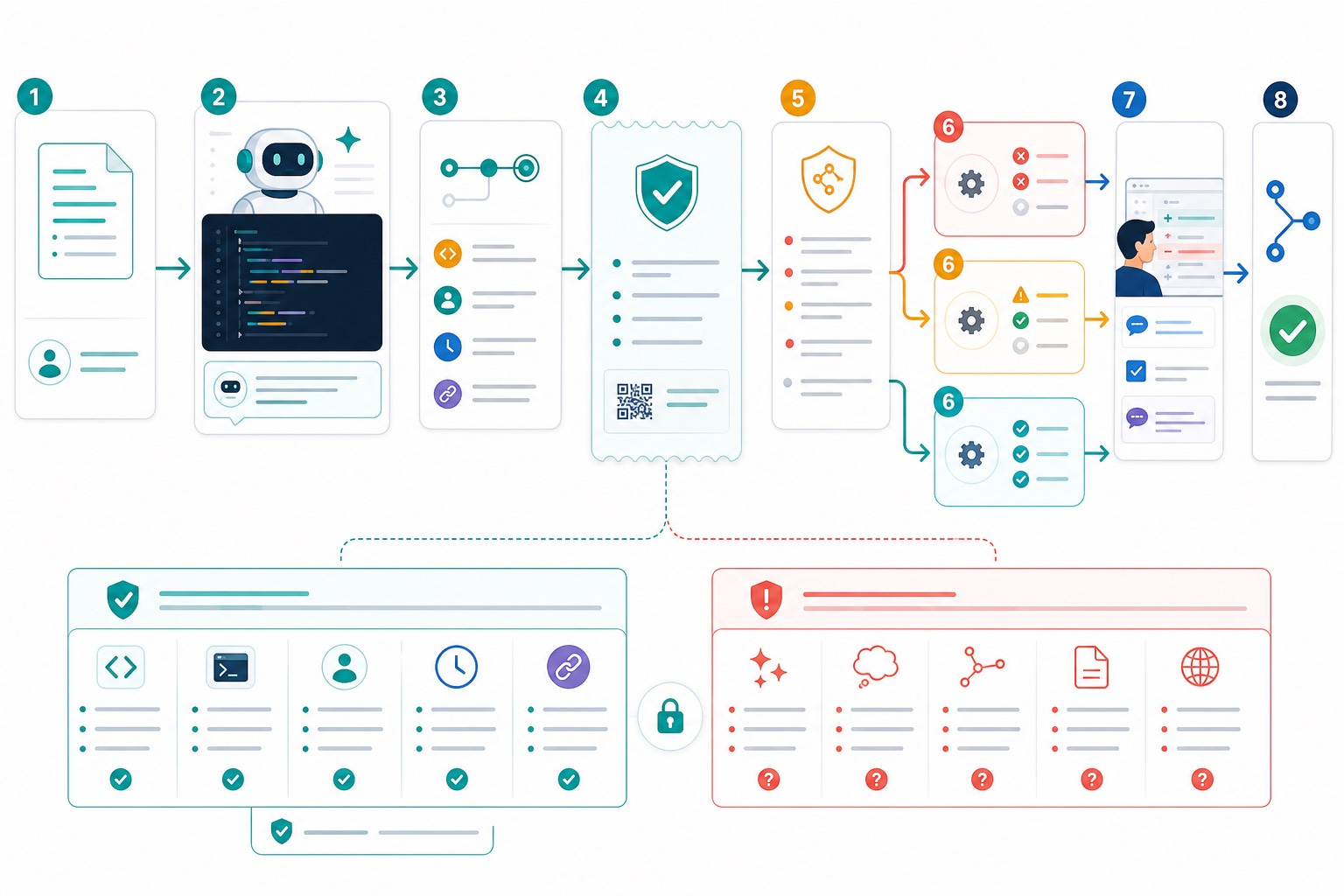
The seven sections every trust-first media kit should include
1. Clear positioning in one sentence
Open with a sentence that explains what you do, who you help, and what kind of outcome you are known for. This is not the place for abstract mission language. It should be concrete enough that a busy reader immediately understands your lane.
Weak: “I help brands unlock transformation through innovation.”
Better: “I help B2B founders turn complex technical products into credible thought leadership, customer education, and better investor storytelling.”
2. Short professional bio and longer optional bio
You need both versions because different surfaces need different depth. The short bio handles podcast intros, speaker pages, and quick briefs. The longer version gives context for press, event organizers, or partner decks. Both should focus on relevance, not autobiography.
3. Proof of expertise
This is the heart of the kit. Include specific proof such as notable projects, outcomes, client categories, product milestones, publications, speaking appearances, audience growth, repository stars, newsletter subscribers, or measurable business results. Choose proof that matches your actual goal.
If you want podcast invitations, prior speaking clips and sharp ideas matter more than follower counts. If you want consulting clients, outcomes and case snapshots matter more than inspirational language.
4. Topics, offers, or themes
Spell out the topics you can speak on, write about, or help with. Make this skimmable. Hosts and collaborators often need a quick sense of what conversations you can carry. This section also prevents a common personal-branding mistake: forcing people to guess what you want to be known for.
5. Audience fit and context
If relevant, include the communities, industries, buyer types, or audiences you reach well. This does not have to be bloated with demographics. The point is to answer: “Why are you a fit for this room?”
6. Social proof and credibility signals
Add a few testimonials, notable logos, media features, credentials, certifications, or verified skills that strengthen trust. Keep this selective. Five good signals beat twenty noisy ones. The goal is to show real-world validation, not overwhelm the page.
7. Downloadable or reusable assets
Include your headshot, logo if relevant, bio versions, contact information, website links, and maybe a few approved images or sample links. Make it easy for someone to use your materials correctly without emailing back and forth.
Rule of thumb: every section should answer one fear in the reader’s mind. “Who is this?” “Are they credible?” “Can they help?” “Will they fit this opportunity?” “Do I have what I need to move forward?”
How to use AI without making the kit feel fake
This is where most people go wrong. They ask AI to invent the entire kit from scratch. The result is a smooth but hollow document. It sounds professional, but it does not feel earned.
A better approach is to treat AI as an editor, organizer, and variant engine.
Start with a source pack
Before prompting anything, collect the raw materials: your current bio, LinkedIn headline, website copy, testimonials, key numbers, work samples, notable wins, topic list, and best links. Put them in one document. AI performs much better when it is rearranging evidence than when it is guessing your identity.
Use AI for compression
Ask AI to produce three versions of your positioning statement, two bio lengths, five topic angles, and a short proof summary. Then edit aggressively. Keep the lines that sound like you and delete the lines that sound like everyone.
Use AI for audience-specific variants
Your core kit can stay stable while your framing changes slightly for different use cases. A founder may need a podcast version, a press version, a partnership version, and a speaking version. AI is useful here because it can re-prioritize existing proof without changing the truth.
For example, the same person might emphasize revenue outcomes in a client-facing kit, audience clarity in a podcast kit, and research depth in a speaker kit.
Use AI to find weak claims
One of the best prompts is not “write this better.” It is “highlight anything vague, generic, unverifiable, or repetitive.” That turns AI into a credibility auditor. If your kit says “thought leader,” “passionate,” or “results-driven” without visible proof, AI can help flag the soft spots.
A simple 60-minute workflow
If you do not have a media kit yet, do this in one focused session.
Write your one-line positioning statement.
Gather your raw proof: links, metrics, testimonials, case snapshots, appearances, and credentials.
Draft a 75-word bio and a 180-word bio.
List five topics you want to be invited to discuss.
Choose three strongest trust signals.
Ask AI to tighten the wording and create one variant for each use case you need.
Design it as a simple PDF or clean web page with generous spacing and clear links.
That last point matters. Most media kits do not fail because of missing data. They fail because they are visually noisy, too long, or too generic. A sharp one-page version often outperforms a ten-page vanity deck.

What to leave out
A strong personal brand media kit is defined as much by omission as inclusion. Leave out:
inflated adjectives without proof
long origin stories that bury your relevance
follower counts with no context
every logo you have ever touched
generic AI-generated phrases that could belong to anyone
stale metrics you cannot defend
If a line does not make a decision easier, cut it.
The real strategic benefit
The biggest advantage of a media kit is not aesthetic. It is strategic clarity. Building one forces you to define what proof matters, which audiences fit you best, which topics you actually own, and what kind of reputation you are trying to build.
That is why this matters beyond podcasts or press. A personal brand media kit can improve your About page, your speaker page, your LinkedIn summary, your outreach emails, your guest applications, and even your internal confidence about how to present yourself.
In other words, the media kit is useful because it is a packaging exercise for your digital identity. AI can help you produce it faster, but the leverage comes from deciding what should be true and visible about your brand in the first place.
Final thought
If AI keeps making polished content cheaper, then credibility assets become more valuable. Your personal brand cannot rely on polish alone. It needs portable proof.
A trust-first media kit gives you that proof in a form other people can actually use. Build it before you need it. The best opportunities often go to the person who looks easiest to trust, not just the person with the most talent hiding behind scattered links.
FAQ
What is a personal brand media kit?
A personal brand media kit is a compact document or web page that explains your positioning, proof, topics, assets, and trust signals so journalists, hosts, clients, partners, or event organizers can evaluate you quickly.
Who needs a personal brand media kit?
Founders, consultants, creators, executives, freelancers, speakers, job seekers, and technical experts can all benefit from one if opportunities depend on credibility, clear positioning, and reusable profile assets.
What should be included in a founder media kit?
A founder media kit should include a clear positioning statement, short bio, proof of expertise, company or domain context, relevant metrics or milestones, speaking topics, social proof, approved assets, and contact details.
Can AI help create a professional media kit?
Yes, but AI works best when it edits and structures real evidence. Use it to compress your bio, generate variants for different audiences, surface vague claims, and organize proof. Do not use it to invent authority.
How long should a personal brand media kit be?
Usually one page is enough for the core version. You can also keep a longer reference page online, but the first impression should stay short, skimmable, and easy to reuse.
What is the difference between a media kit and a press kit?
A media kit often supports broader business, partnership, speaking, or creator opportunities. A press kit is narrower and usually built for journalists. In practice, many professionals can create one trust-first asset that serves both functions with small audience-specific edits.